Reston Spring

Reston Spring
Reston Spring
Showing posts with label Road Construction. Show all posts

Wednesday, November 23, 2016

Cost of Key Reston Station Area Road Improvement Projects to Double or Triple Board-approved Projections?

Wednesday, June 22, 2016

Find out about new road taxes at the RNAG Community meeting next week.


Next Monday, June 27, 7PM, North County Government Center, FCDOT will present a community meeting on funding the proposed re-shaping of the roadways in and around the Dulles Corridor to accommodate the massive growth planned there over the next 40 years.  We anticipate two key elements of the FCDOT presentation (although we do not have the presentation). 

  • First, an update on the scope of the mitigation efforts that will be required to handle the traffic expected as density mushrooms along the Dulles Corridor.   So far, FCDOT has gone through two of the three tiers of mitigation (from easiest/cheapest to most difficult/expensive).  According to  in late March, even with these Tier 2 improvements, 31 station area intersections will still be operating at Level of Service (LOS) “F” during the peak AM or PM or both hours.   


Second, in a presentation to just the Advisory Group this week, FCDOT noted that it has found unexplained $223,000,000 in savings for the “grid of streets,” which were always planned to be paid for by developers only.  However, no explanation is provided on how all this money is to be saved.  

We are perplexed by how FCDOT managed to reduce the cost of the “grid of streets” for developers by nearly a quarter-billion dollars (22%) without significantly lowering County expectations for these roadways.   We don’t know what features (number of lanes) or amenities (bike lanes) might have been cut to achieve this savings.  In short, it sounds too good to be true. 

On the other hand, FCDOT is proposing that station area residents pay a new property-based tax.   It described two new funding options (new #6 and new #7) that would entail a new Tax Service District (like the one all Restonians pay for the Reston Community Center) for station area residents that would cost them $0.015/$100 valuation to fill an $85-$110 million funding gap depending on the option selected.   Please see the footnote below that says New Option #6 would actually need to have another $0.005/$100 valuation—or a total of $0.020/$100 valuation—to cover cash flow needs.  Always read the small print.  FCDOT says this would add $75 to $100 to each taxpayer’s bill (depending on the option) for a property valued at $500,000.
 

At the risk of repeating ourselves, we would make the following points on the proposed taxation of Reston station area residents to fund these roadway improvements:

  • Station area residents will derive no benefit from these roadway improvements; in fact, just the opposite.  It is the stated intent of FCDOT to degrade to intersection Level of Service goal for these streets from LOS “D” to LOS “E.”  More broadly, this degraded service intent extends specifically to the through streets—the ones Restonians beyond the station areas use to travel from one side of Reston to the other—even though they do not intend to go to or from the station areas.    
  • At the same time, developers will likely earn nearly $6 BILLION over the next five years from their existing and new Reston station area construction.   The roughly 6,000 homeowners in the station areas will not receive one extra dollar in income because they live in the station areas, yet they will be taxed an added $85-$111 million over the same five-year timeframe.   If that tax cost were paid by the developers, it would represent less than two percent of their net operating income in the same five-year period.
And please note that:
  • The $.015/$100 valuation (or the more likely $.020/$100 valuation) tax is almost certainly a “teaser rate” introductory tax.  Tysons’ Tax Service District tax rate went up one full penny per $100 valuation in one year, and will likely continue to rise.  We can expect the same in Reston.
  • Property appreciation will have its usual impact on property taxes:  As the property value rises, so will the Tax Service District tax—even if the rate doesn’t change.
  • Tax Service District will never go away.  Just because the construction cost gap is closed in five years doesn’t mean there won’t be maintenance costs forever that will be paid by this residential tax.  And it is not at all clear that the money will even go to Reston or to roads.
  • Forcing residents of the station areas (or all Reston as previously proposed) to pay an additional tax for roads that will be less passable than at present is nothing less than massive and grotesque corporate welfare served up by the County to appease developers who are already making billions in profits each year.

Moreover, if $233 million FCDOT cut in the “grid of streets” cost can be cut from developers’ contribution to the grid, why couldn’t the developers easily pick up the $85-111 million FCDOT wants the residents of the Dulles Corridor to pay?  After all, to do so would still mean a savings of $122 million or more for them—and presumably decent streets.


All these are observations and questions Reston attendees at next week’s RNAG community meeting may want to pursue with FCDOT.  Again, that meeting is next Monday, June 27, at 7PM at the North County Government Center.  


Come and learn about the cost and financing of future streets in our station areas and how much you may have to pay for them.  

Thursday, May 12, 2016

FC Transportation backs off from proposed Reston-wide tax for road improvements.

We have received a copy of the following e-mail from Janet Nguyen, Fairfax County Department of Transportation:

From: Nguyen, Janet L <Janet.Nguyen@fairfaxcounty.gov>
Date: Tue, May 10, 2016 at 12:57 PM
Subject: Advisory Group - Funding Updates
To: Andy Sigle <awsigle@gmail.com>, Bill Keefe <wkeefe@ldn.thelandlawyers.com>, "Cate Fulkerson (RA)" <Cate@reston.org>, Delores Bailey <summatra@aol.com>, "John Mossgrove (jmossgrove@merrittproperties.com)" <jmossgrove@merrittproperties.com>, Liana Kang <liana.kang@yahoo.com>, Maggie Parker <mdparker@comstockpartnerslc.com>, "Mark Looney (RCC)" <mlooney@cooley.com>, "Matt Valentini (JBG)" <mvalentini@jbg.com>, "Robert Goudie (RTC)" <RGoudie@restontc.org>, Tim Cohn <tim@timcohn.com>
Cc: "Johnson, Carroll R" <Carroll.Johnson@fairfaxcounty.gov>, "Kanownik, Kenneth J." <Kenneth.Kanownik@fairfaxcounty.gov>, "Biesiadny, Tom" <Tom.Biesiadny@fairfaxcounty.gov>, "Davis, Jr, Paul L." <Paul.DavisJr@fairfaxcounty.gov>, "Calkins, Kristin" <Kristin.Calkins@fairfaxcounty.gov>


All,

Just wanted to give the group an update about work on the funding plan.  In the April meeting, staff discussed various scenarios for funding an example private share of the funding plan.   The scenarios included use of a road fund or a road fund in combination with a service or tax district:

Road Fund Only
  1. Use Tysons residential rates (Tysons-wide and Tysons grid combined but normalized for unit size) and determine Reston commercial rate to meet need.
  2. Use Tysons commercial rates (Tysons-wide and Tysons grid combined) and determine Reston residential rate to meet need.
  3. Determine set of rates that match proportion of total residential vs. total commercial development in Reston.
Road Fund with other revenue sources (Use Tysons combined rates (in option 1 and 2) and…
  1. Fills gap with a service district over Reston TSAs (all properties).
  2. Fills gap with a tax district over Reston TSAs (C&I Only).
  3. Fills gap with a service district over Reston and Reston TSAs.
  4. Fills gap with a service district over Special Tax District 5.
After further analysis, scenario 6 and scenario 7 have been removed from consideration.  This announcement will also be made at the Reston Network Analysis public meeting scheduled to be held on Wednesday, May 18th.   Staff hopes to schedule the next advisory group meeting for funding in June.

Janet Nguyen
Coordination and Funding
Fairfax County Department of Transportation
T: 703.877.5770, TTY 711
As indicated by the sentences we have highlighted, FCDOT is dropping its proposal to RNAG to tax the entirety of Reston for road improvements and additions required by the planned intense development in the Transit Station Areas.  That said, FCDOT has NOT dropped the option to tax the residents of the TSAs (Options 4 & 5).

As we have stated before, we do not believe the residents of Reston--or any portion of Reston--should be forced to pay taxes that are used solely for the purpose of subsidizing developers profits, which is exactly the case here.  With forecast profits for Reston TSA developers over the next 40 years of more than $50 billion, the developers can easily absorbed the full $2.6 billion in road improvement costs (about 5% of their future profit) FCDOT anticipates will be needed.   Restonians, including TSA residents, gain nothing financially from the roadway improvements; in fact, FCDOT's explicit goal is to increase congestion on TSA roads to discourage driving!

Yes, the transportation tax TSA Restonians would be forced to pay under Option 4 & 5 to "improve" roads would be used to drive them out of their cars--not improve their driving experience. 

Tuesday, April 19, 2016

Op-Ed: Reston Transportation Tax Proposal is Grotesque County Corporate Welfare, RestonNow, April 18, 2016

The following is a re-post from RestonNow.

Op-Ed: Reston Transportation Tax Proposal is Grotesque County Corporate Welfare

This is an op-ed by Reston resident Terry Maynard. It does not reflect the opinion of Reston Now. Something on your mind? Send a letter to news@restonnow.com.
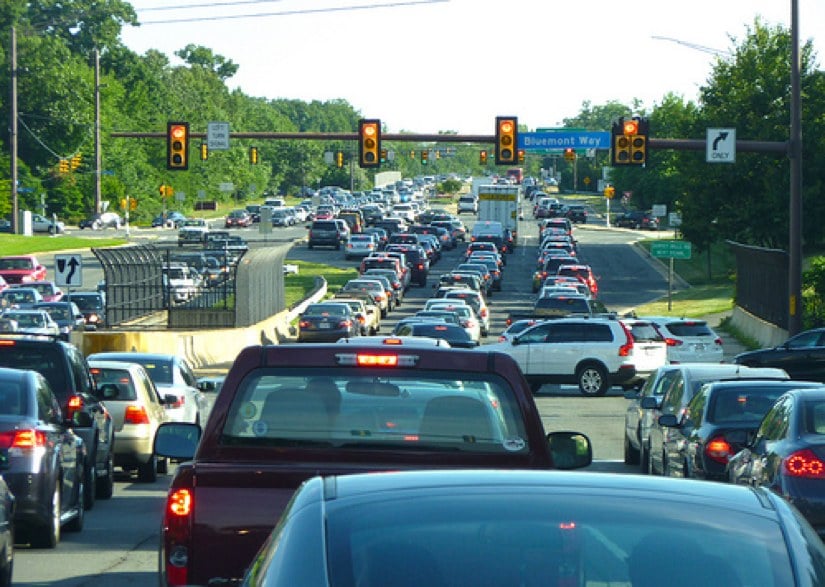
Restonians are once again faced with the prospect of the burden of an added local “tax service district  that could add hundreds of dollars to their annual property tax bill every year. The one we already have, Small Tax District 5, supports our Reston Community Center in providing cultural and educational activities for the community. The proposed new one would solely subsidize developer profits while increasing county tax revenues.

As this discussion continues, Reston Association has shared a questionnaire online with its weekly RA NewsLine (click on “Transportation Tax Survey) for residents to provide feedback on the Reston special transportation tax district idea. I urge all Restonians to vote “NO.” The following provides an explanation why.

The basis for the proposal lies in planned development in Reston’s station areas, growth that will exclusively benefit Reston’s station area landowners. Assuming that all Reston developers are as successful as Boston Properties per its 2015 annual report, their likely profit will total more than $53 billion over 40 years after building costs. That includes more than $9 billion from their future development as well as more than one billion dollars per year from their existing Reston holdings. That is an average of $1.3 billion per year!

Yet these same developers, backed by the County, want Reston homeowners to pick up as much as half of the $2.6 billion tab — about $65 million per year — for needed station area road improvement even though their total cost will be less than three percent of their profit from their Reston properties over the next 40 years.

The forecast annual road improvement cost is less than five percent of the future annual profits of the Reston station area landowners and can be easily absorbed as part of their investment in offsetting the impact of their development, but the County is proposing that residents pay some of the road costs.

One of the transportation tax options the County has proposed is that all Reston homeowners pay $.025/$100 residential property valuation to help defray the road improvement costs. Today, with the average Reston home valued at $428,000, the added cost of that Reston special tax would be $107 per year to start.  This special tax would be in addition to the average $202 Restonians already pay to operate the Reston Community Center, a County public facility committed primarily to Restonians’ use.

With 3 percent annual appreciation in the value of a family home and/or general inflation, the average added transportation tax cost would be more than $200 per year per household over the next 40 years for an average-priced home — assuming the mix of home values remains constant (and it is more likely to increase with thousands of new high-priced condos in the station areas). On a community-wide basis, that three percent annual growth in assessments would mean the average Reston homeowner would pay more than $8,800 and the total residential community tax contribution would be more than $350 million over 40 years. And that is without any shift in housing mix or tax rate increases by the Board of Supervisors.

The Board is driving the transportation tax idea because it believes that by encouraging the growth of taxable real estate values, it can solve its budget problem. Another Reston special tax district at $.025/$100 valuation Reston-wide tax rate would bring in about $4.4 million in new revenues in the first year — and grow every year thereafter — even if there is no development. Moreover, from the Board’s perspective, to the extent these taxes encourage developers to build sooner because of lower investment costs, it will create even more high-tax value high-density real estate. It’s a win-win situation from a Board perspective: More tax revenue through subsidized corporate development.

And all of that special Reston tax money would go to Reston’s station area landowners in defraying the road infrastructure costs of their for-profit development. Specifically, the taxes would be used to improve roads that go to, from, within, and through the station areas to serve developer properties that would be required for their profitable high-density development.  Yet–
  • If the developers believe they will earn an adequate return on their investment, they will build the roads needed to help make their new construction profitable anyway without a special Reston residential tax subsidy.
  • If they choose not to build for whatever reason, then Reston won’t need improved roadways (except to meet existing standards) and, therefore, we won’t need any added transportation taxes.
If the transportation tax is approved, Restonians would have no special access or other benefit to anything in the station areas despite paying a significant sum for these new or improve roads, even free parking. People from all over the county, the state, even beyond Virginia, including most of the 60,000-plus Reston station area employees who commute here daily, will use the station area roads for free while Restonians pay for them. Even those Restonians who choose not to go to the station areas (or go there rarely) such as retirees on fixed incomes and younger, less affluent Restonians will still have to pay the full transportation tax.

The ultimate irony of this road “improvement” tax proposal is that the County literally promises worse congestion as a desirable traffic “goal.”   So Restonians will be taxed to experience worse congestion, even those who only drive through the station areas, say, on Wiehle to/from the Dulles Toll Road, with no intention of visiting them.

The bottom line is that the transportation tax proposal completely detaches who pays the tax from who benefits from it. Residents pay more for less usable roadways; developers pay less and profit more. It is unfair and inequitable to Restonians by any measure.

The idea that taxing Reston homeowners, whether they live in the station areas or beyond, because they will garner some unidentified, much less quantifiable, “benefit” from the development there is a deceptive scheme and the County knows it.   The proposed County transportation tax is, in fact, nothing more than grotesque corporate welfare, the Reston property owner paying more taxes so major Reston developers can increase their profits and the County can increase its tax revenues.

The transportation tax idea should be opposed vigorously by the Reston community, the RA Board of Directors and other community leaders and organizations, the County-appointed RNAG advisory group examining Reston’s transportation options, and ultimately the Board of Supervisors itself. Do what you can now:

Terry Maynard
Reston

Wednesday, July 23, 2014

The County is not ready for commuter access to the Wiehle Metro Station.


We are now less than a week away from the much anticipated and long overdue opening of the Silver Line Phase 1 to Wiehle Avenue Station in Reston.   And yet, the County and state have completed barely half the projects required to make the station and Metrorail accessible, especially those for bicyclists and pedestrians.

First, let’s take a look at the key preparations that are in place:

  • The County has adjusted the Fairfax Connector bus routes in and around Reston to deliver passengers to the station in a largely zero-sum financial game.  (Initially, it proposed taking more money from Reston buses to apply to Tysons and McLean, but ultimately found some other funding, at least for the reduced-fare Tysons circulators.)  In Reston, there will be slightly more frequent rush hour feeder service and new mid-day routes, but there still are gaps in schedules and hours of service are limited.  There simply is not enough bus service to really encourage Metrorail usage. 
  • The County has completed about 500’ of sidewalk on the north side of Sunset Hills & west side of Wiehle to make pedestrian/bicycle access possible to the Metro station. 
  • Comstock has met its various road improvement obligations to upgrade intersections near the station (mostly at Wiehle and Sunset Hills) under its public-private partnership (PPP) deal with the County. 
  • Comstock has also completed the underground parking garage required by the PPP, including 2,300 spaces for public Metro parking and 1,000 spaces it controls for future tenants.  It is charging as low as $4.50 per day for one of its parking spaces (more if you want special services including guaranteed parking), thus undercutting the County’s $4.85/day charge for its parking spaces right next door.   (Note:  The County could have set its daily charge at any level.  It chose go to with the WMATA standard for Metro’s station garages.)

There are two key sources to look at for information on what has not been done and—in some cases—what will not get done until next decade.  The first of these is the April 15, 2008, Reston Metrorail Access Group (RMAG) report (yes, six years ago) that recommended proposed improvements—road, bus, bicycling, and pedestrian—to make the Wiehle station more accessible.  It has basically set the agenda for work that needed to be done by the time the Silver Line station was opened.  The second is the County’s tracking tool for the implementation of these improvements. 

The latest available County tracking document shows there are a total of 32 “spot” and “linear” projects, most of them recommended by RMAG, that are needed for proper access to the station.  What that document shows is that 12 of them are complete, six of those by Comstock under its PPP agreement.  The County document also shows that five other projects (all to be done by Comstock—identified as “Dulles Rail Project”—should have been done by May, and we suspect that they have been completed.   All told, that’s 17 out of 32 projects probably completed by the time Metrorail opens at the Wiehle station some nine months late.   We’re half way there!

So what’s missing six years after the RMAG report and nearly a year after the Silver Line was supposed to open?  

The most critical missing link, according to RMAG, and one that is not even on the County list is the so-called Soapstone Connector, the planned roadway/bridge/ped-bike route across the Dulles Corridor from Sunrise Valley Drive to Sunset Hills.  Nonetheless, at this time, the County has picked a route and a configuration for the Connector after conducting a feasibility study last year (five years after the RMAG report).  As of this spring, it has budgeted only enough money through the end of the decade to develop plans for the construction of this Connector. 

The Soapstone Connector project won’t be built until at least the next decade.   Its absence—likely for more than a decade—means that traffic going to/from the Wiehle Silver Line station from the south as well as all traffic in both directions trying to cross the Dulles Corridor or use the Dulles Toll Road from Wiehle MUST use Wiehle Avenue.   In short, it will likely take as long to build this single bridge (from feasibility study to opening, forget the 6-year old recommendation) as it will take to complete the entirety of the Silver Line—and workday traffic will be jammed the entire time.

So what is the status of the other Wiehle Station access improvements?

All of the tasks the County lists that have not been completed except one are the responsibility of the County (FCDOT).  Comstock has completed its obligations, the schedule indicates.  The lone state project (VDOT) not yet completed is crosswalks across Wiehle at Isaac Newton Square, which is scheduled for completion next month.  As for the County’s eleven uncompleted projects (out of a total of 14):

  • The earliest to be completed will be four scheduled to be done in 2016, including pedestrian intersection improvements on Town Center Parkway (in fact, a Phase 2 project) in April 2016, intersection and sidewalk improvements done by June 2016, and more pedestrian intersection improvements by October.
  • Two more similar projects are scheduled for completion in July 2017.
  • The remaining five projects, including a proposed grade-separate crossing for the W&OD trail across Wiehle, have not yet been scheduled.

What is clear from this brief look at the projects and their scheduling it the County has so far minimized its investment in improving access to the Wiehle Metrorail station while talking incessantly about how important the Silver Line will be to reducing area traffic.  

That won’t happen if people can’t get there.  Moreover, it will hinder developer interest in building the transit-oriented development (TOD) in the station areas that the County sees as a balm to its growing financial difficulties.  

We think it would be better if the County put its money where its mouth is.  But then, maybe its financial "mouth" is only in Tysons Corner.

Sunday, December 22, 2013

A little Christmas traffic humbug from Dr. Gridlock, Washington Post, December 22, 2013

We guess that, because it's the end of the year, people feel compelled to give their forecasts for what's to come.  Dr. Gridlock even begins with Charles Dickens' Ghost of Christmas Future, but really, do we need to hear this now as we prepare for Christmas???

Apparently the Greater Washington Board of Trade and the MWCOG Transportation Planning Board felt compelled to share the following wonderful news about our driving future in 2040 under the Constrained Long Range Plan (a plan that includes current area governments' financial commitment to transportation investment):
According to the forecast for 2040:
●Lane miles of congestion, a standard measure of poor traffic flow, will increase by 71 percent.
●The total number of trips taken in the region will increase by 24 percent.
●Vehicle miles traveled, another standard measure of road use, will increase by 23 percent.
●The ways in which we travel will not change significantly. About two in every five trips will be done by solo drivers. About 7 percent of daily travel will be done by transit, same as today.
●The population of the outer suburbs will grow at the fastest rate, suggesting that many people will continue to have long trips to work.
●Job growth will be greatest in the outer suburbs of Virginia, but the highest concentration of jobs will be in Fairfax and Montgomery counties and the District. So today’s east-west commuting pattern, a stress factor on travel by highway and bridge, will remain.
OK, the news isn't all bad.  The article talks about plans for road widenings and the rest.

Still, on balance, it's a Christmas humbug!

Read the full article here for an overview of this forecast.

Friday, May 31, 2013

Transportation pie, Fairfax Times, May 31, 2013

This commentary by Eileen Curtis, President of the Dulles Regional Chamber of Commerce, provides an interesting perspective on the different views of the No. Va. Transportation Authority vs. the No. Va. Transportation Alliance on the proposed allocation of the $189 million coming to the area for transportation improvements.
A recent breakfast gathering of the transportation cognoscenti of the region and presented by the Northern Virginia Transportation Alliance posed this question: How will our various Northern Virginia jurisdictions split up the pie of new transportation money? County leaders or their representatives from Fairfax, Prince William, Arlington and Loudoun comprised the panel of presenters. Perhaps the most interesting information, however, came from the discussion sheets provided to the audience. . .
. . . The Authority comprises appointees drawn mainly from the chairs/mayors of the nine cities and counties comprising the Authority, along with a smattering of General Assembly members, transportation officials and gubernatorial appointees. By its nature, the pie will be split according to parochial interests. There is another transportation group that has been on the ground for a number of years, the Northern Virginia Transportation Alliance, headed by Bob Chase. He and his organizations are the gurus to which our chamber and most all other chambers pay attention when questions arise about roads and bridges. They are nonpartisan, and they are experts. Mass transit is not part of their core mission.
After presenting the differing lists of the Authority vs. the Alliance, the article continues:
 Only the Authority requested monies for public transit alternatives such as work at three VRE stations and two WMATA projects: traction power upgrades on the Orange Line and 10 new buses on Virginia routes, together totaling $12,000,000.
What does this mean to us citizens? It gives two different views of how to prioritize transportation needs, one from a mainly legislative body, one from a transportation expert viewpoint, one encompassing both roads and mass transit, the other just roads. I hope you will use it as a road map to inform your own point of view and to share that with your legislators. It will be the Authority that cuts the pie.
Get the details here. 

Its useful to have this kind of perspective from a regional business executive as we think about what to do with the scarce funding available to improve our abominable transportation situation.  


Tuesday, April 23, 2013

Map and Status of Wiehle Metrorail Station Access Improvement Projects

Below is a map copied from the Fairfax County DOT website showing the 32 improvements in roads, sidewalks, and paths that are planned to make access to the Wiehle Metrorail station easier, largely fewer traffic delays and better pedestrian and bicyclist access on both sides of the station.  The small green and orange circles identify the location of each planned improvement and are linked to a listing on the website of what will be done at those locations.  For the most part, these improvements were recommended to the County Board of Supervisors by the Reston Metrorail Station Access Group (RMAG) in April 2008--and the Board accepted the recommendations.

The orange circles mark all the improvements Comstock Partners must complete before the Wiehle Metrorail station is open in accordance with its "Record of Decision" with Virginia DOT to mitigate traffic in the area.  The good news is that most of the improvements have been completed and all of them will be completed before the end of year when Metrorail service is scheduled to begin.

The green circles mark the improvements that are planned and implemented by the Virginia and Fairfax County DOTs.   They include a mix of improvements largely for better pedestrian and bicyclist access to Wiehle station. Virginia has completed the two projects for which it was responsible--bike lanes on either side of Soapstone Drive. Out of the remaining 19 improvements Fairfax County is planning to improve access to the Wiehle Metrorail station:
  • None are complete.
  • Only three will be completed before Metrorail opens--two sidewalks (#15 & #16) and a walkway (#30).
  • Six have completion dates in July 2017.
  • Ten do not yet have an identified completion date.  They are "To be determined."
The map and accompanying project list and status on the website do not reflect two important improvements recommendations in the RMAG report.
  • The Soapstone Connector:  Identified in the RMAG report as the improvement with "the greatest effect in the  increase of throughput in the AM peak period" near Wiehle station, the feasibility study for this link from Soapstone Drive across the Dulles Corridor to Sunset Hills somewhere near the Wiehle Station began this year.  It is unlikely that the bridge will be built before Metrorail is completed to Loudoun County in 2018, meaning area drivers will face huge congestion crossing the corridor on the Wiehle Avenue bridge.
  • Other pathway extensions and upgrades:  These are the responsibility of the County, VDOT, and  Reston Association.  As part of its participation in the RMAG effort, RA's Pedestrian and Bicycling  Advisory Committee (PBAC) generated a thorough report on the improvements that needed to be completed in conjunction with the opening of Wiehle Station.  (See "Reston on Foot" on the RA website.) Some of these may be incorporated in the list of projects laid out by the county (including the 3 walkways mentioned above that will be completed by December). 
We simply do not understand how our elected leaders can fail to plan, budget, and implement in a timely fashion essential auto, bicycle, and pedestrian improvements in the Wiehle station area when given a five-year lead time to do so.  In particular, the County did not budget any money for these essential transportation improvements until last year and RA has still not budgeted funding for improving pathways near Wiehle station. 

While an argument has been made that some of these improvements may be accomplished through proffers (such as access to the south side of the Metrorail station on Vornado's property), we are aware of only one recent meeting with Vornado that has taken place.  RMAG recommended direct access across this property both for a bus stop and a walkway/bikeway.  The RMAG proposal for direct bus access to the Metro station across Vornado's property is not even on the list of planned access improvements--along with a number of other RMAG recommendations.  Completion of the walkway/bikeway is "to be determined."

Metrorail users will have trouble driving to the WIehle station area, especially during peak periods, and pedestrians and bicyclists will face delays, greater hardships, and greater  risk of injury as a result of the delayed action on road, transit, pedestrian, and bicycling improvements in this station area.
 
Reston Area Metrorail Station Access Improvements Projects Map

Tuesday, March 5, 2013

Will major property tax increases be coming to Reston with TOD development?

Reston 2020 and the Reston Citizens Association have watched the Tysons tax service district negotiations unfold over the last couple of years, believing that what happens in Tysons in terms of financing the hugely ambitious (OK, grandiose) plans for urbanizing that area would happen here in Reston as plans for TOD development around its new Metrorail stations were finalized.

As the Tysons tax debate heated up, the RCA Board of Directors passed a resolution supporting the McLean Citizens Association in its effort to have developers pay for most of the needed infrastructure development there because, in the end, they will be the only ones to profit from it.  It also testified to the Board in support of the MCA in making infrastructure financing at Tysons equitable.  By in large that has occurred, but as the Tyson Patch article below reports, Tysons residents will see a significant increase in their tax rate as well--in part because Virginia law precludes different rates for different classes of property owners in a given area.

The issue is not so much whether, but how, such a tax template might be imposed on Reston by the Board of Supervisors.  As we know, the BOS has not hesitated in making Reston pay for its own Community Center (Small Tax District #5--STD#5)--the only other such county arrangement for a community center being in McLean where the special tax rate is half the $.0473 per $100 assessed valuation extra paid by Restonians.  And now, of course, The Reston Community Center is proposing to build a $50 million Recreation Center at Baron Cameron Park, which will almost certainly add to the STD#5 tax.

So, will the Board decide that STD#5--taxing all properties in Reston, commercial and residential--is a good enough way to handle the costs of the multi-billion dollar infrastructure--the three new corridor crossings are estimated at a half-billion dollars alone--that will be needed for Reston's TOD areas in the next 20-30 years?

Or will it create a special tax service district just covering the TOD areas (the Reston Task Force Phase 1 study area) that would see an even higher tax rate increase?

Or will the Board come  up with some other way to tax Restonians?

None of this has been discussed officially yet, but there is not doubt that such conversations are going on in the halls of the Fairfax Taj Mahal.

So here's what's happening at Tysons:

Tysons Tax District: Board to Advertise Tax Rate

Residents in the newly-created Tysons District could pay anywhere from $312 to $720 more in taxes, on top of the proposed countywide real estate hike. 

By William Callahan
The Fairfax County Board of Supervisors are expected to advertise a number of proposed tax increases for FY2014 during its meeting Tuesday, kicking off the public hearing and community input process ahead of final approval in April.
The hit for Tysons residents is expected to be larger than usual this year, thanks to a newly-formed Tysons Tax District.
The district, which hikes property taxes on both residents and developers, will help fund billions of dollars in transportation infrastructure over the next 40 years, moving the area closer to becoming the county’s new urban downtown center. . . .
Click here for the rest of this article.

Thursday, January 31, 2013

Friday, December 28, 2012

Outer Beltway: Plans for Loudoun-Prince William highway move forward; crossing to Md. under discussion, Washington Post, December 28, 2012

By Tom Jackman, The State of NoVa Blog
A state map of the planned 45-mile highway from Route 7 in Ashburn, past the west side of Dulles Airport, down to Dumfries and I-95 in Prince William County. (Virginia Department of Transportation - Office of Intermodal Planning and Investment)
The major North-South highway that is being planned for Loudoun and Prince William counties got a public rollout of sorts last week. “Open houses” were held at Stone Bridge High School in Ashburn and the Four Points Sheraton in Manassas. There were no formal presentations for this new “Northern Virginia North-South Corridor,” just a series of informational boards that showed roughly where the limited-access highway would go and why local and state officials think it’s needed.  . . .
The main stated goals of this highway are to increase the freight tonnage going in and out of Dulles International Airport (it would run just west of the airport) to further juice up the region’s economy. It would also improve traffic between Loudoun and Prince William as they continue to grow. Many who drive congested Route 28 or two-lane Route 15 to head north or south at peak hours would welcome an alternative.
Environmental and smart-growth groups say that east-west traffic and mass transit are what need money and attention, and that a new north-south road without mass transit just creates more sprawl and more traffic. . . .
Meanwhile, the project continues to have the feel of a done deal. The local governments in Loudoun and Prince William are on board, as is the National Park Service (the highway will stream along the western edge of the Manassas battlefield). Developers are ready to turn long-vacant properties in Loudoun and Prince William into new residential and commercial hives. . . .
Click here to read the full article including reaction by smart growth advocates.  

Friday, December 21, 2012

I-95 to Dulles Plan Includes HOV Lanes, Potomac Local, December 21, 2012

By URIAH KISER
PRINCE WILLIAM COUNTY, Va. – Option one: Build a road. Option two: Build a road with toll lanes and dedicated routes for transit buses.
Virginia Transportation officials showed plans for the North – South Corridor – a swath of land between Interstate 95 to Dulles International Airport that has been identified for a new road that resembles an outer beltway to link the outer suburbs with the state’s busiest airport.
The identified route runs along the existing Va. 234 corridor between I-95 and I-66 in Prince William County. Plans include widening portions of the roadway and adding High Occupancy Vehicle and toll lanes. From I-66, planners want to build what is known as the Tri-County Parkway which will traverse Prince William and Loudoun Counties (a plan that once had the roadway also running through Fairfax County was scrapped) to connect with U.S. 50., and then expanding Northstar Boulevard in Loudoun County to a connector road that will take drivers into Dulles Airport. . . .
As one person interviewed in this article said, "Is this a transportation solution? If so, what’s the problem?”  According to the article, this is one of the Governor's twelve transportation priorities.  The good news, if any, is that there is no timeframe put on this "outer beltway" idea.  VDOT is taking comments through January 4, 2013--right over the holiday period so you won't be looking. 

Read the rest of this article here.