Reston Spring

Reston Spring
Reston Spring
Showing posts with label Development. Show all posts

Tuesday, July 21, 2020

CPR: Help Stop Fairfax County from Over-Development

Dear CPR members,

At a Fairfax Co. Planning Commission hearing on 7/15, a newly formed, county-wide citizen’s’ group, ACT 4 Fairfax, refuted obvious health and safety issues impacting new residential development in flight path of Dulles Airport.  Only a massive public outcry will stop this travesty. Let the Board of Supervisors and Planning Commission know YOU are watching!
There is an issue in the Sully District that affects all of us county wide. It concerns me because it sets a precedent for ignoring environmental safeguards meant to protect citizens. The issue is that the county has not yet addressed (adopted) the 2019 Metropolitan Washington Airport Authority (MWAA) Noise Contour Map, which has been sitting in the Board of Supervisor’s Land Use Committee since March 2019, nearly 17 months.   Instead the County is using a 27-year-old Noise Contour Map from 1993 to evaluate applications for development around Dulles Airport. 
The process of not using the most current, science-based, objective data to evaluate applications for large-scale development is disturbing and could easily happen in any district in Fairfax County.  Fairfax County needs to use the best available data when evaluating an application, in order to pursue development that is best for the residents of Fairfax County and the environment.
Please email Fairfax County and let them know that the most current scientific data should be used to evaluate all applications throughout Fairfax County and specifically that the Boulevards at Westfields, application RZ/FDP2019-SU-010, PCA 78-S-063-10, PCA 81-S-076, should be deferred until the 2019 MWAA Noise Contour Map is approved and can be used to evaluate the application.
You can email your concerns to the Clerk to the Planning Commission at plancom@fairfaxcounty.gov.  The Planning Commission hearing on this issue is scheduled for Wednesday, July 29th.  Please reference the above application number and state that you would like to have your email distributed to all the Planning Commissioners. Also, please email your concerns to the Clerk to the Board of Supervisors at clerktotheBOS@fairfaxcounty.gov and do the same thing.
Fairfax County needs to have meaningful processes in place to evaluate applications for development and these processes need to be based on the most current and reliable scientific data.
Tammi Petrine, Member
ACT 4 Fairfax
Accountability | Cooperation | Transparency in Fairfax County
A Countywide, Nonpartisan, Volunteer Association of Residents

Tuesday, July 30, 2019

A Brief Look at Fairfax County Efforts to Reduce Residents' Participation in Land Use Planning & Approval Decisions


As we pass through the pre-election doldrums of the Fairfax County Board of Supervisors, we should all understand that both the current and the prospective County Board are in the process of reducing our involvement in critical land use decisions from community planning to project approval consideration.   We don’t yet know if Democratic Board candidate Walter Alcorn, almost certainly Hunter Mill District’s next supervisor, will be swept up in this drive despite his campaign commitment to involve the community.  (His website promises to “Engage the Community to Plan and Approve Projects that Make Sense.”)

This drive to accelerate county land use decisions in part by reducing public involvement began with Board of Supervisors Chairman Sharon Bulova.  The Board’s frenzy for rapid, unfettered urban development goes back to at least 2012.  In a report on a February 2012 Board retreat, the Washington Post noted, 

“County officials outlined the need to rewrite the rules that govern land-use decisions, an effort backed by Bulova. She said that the current process, which allows for intense deliberation and wide public involvement, was better suited to the days when much of the county was farmland.

Today, Bulova said, Fairfax is a more urban and densely populated suburb and requires a more flexible approach that encourages redevelopment, particularly in areas targeted for intense growth, but preserves public engagement.”

“Preserves public engagement” is what one calls lip service that meets the legally required minimum public involvement in land use decisions.  

With that encouragement, the Board proceeded “to rewrite the rules that govern land-use decisions.”  So far, the county has made the following changes:

Fairfax Forward.  This Board planning initiative began shortly after the Board’s retreat.  The initiative aimed to correct what was viewed as a too rigid parcel-specific development nominations process that only marginally involved the community.   

Yet, as the Annandale blog reported, “A staff report on Fairfax Forward issued in February (2013) ‘was disturbingly silent on several critical avenues of citizen and community involvement in reviewing land use proposals,’ states (the Providence District Council) PDC’s comments. “Without amended language to ensure full and meaningful community review, PDC fears that Fairfax Forward could be construed in a way that reduces, rather than expands, community involvement in charting Fairfax’s future.”  In 2016, the county staff acknowledged, “(o)utstanding questions about community participation in (the) process,” but claimed the new system provided a “(c)learer process for citizen participation.”  No changes to improve opportunities for community involvement were added.  

Minor Modifications.   In its first step, the Department of Planning and Zoning (DPZ)  developed a “streamlined” process for handling “minor” changes in zoning decisions that the Board approved in 2017.   From a resident’s perspective, there are several points that stand out:
  • There is no requirement that the county notify the community or even adjoining property owners about proposed zoning changes, only the district supervisor.
  • There is no Planning Commission review, much less a public hearing, on the proposed changes, only a staff review.
  • In the Reston Planned Residential Community (PRC), the Board of Supervisors may approve, without a public hearing, proposed development changes, including dropping recreation uses to the minimum legally required, eliminating “ineffective or obsolete” technological or service proffers (Why would a developer proffer “ineffective or obsolete” technology or services—and why would the county accept them?), and changing architectural design. 
All these changes are not supposed to “materially affect” the proposed development, but, of course, there is no definition of “materially affect?”

In short, the community is cut out of any opportunity for contribution to—even of knowledge of-- potentially important changes in a standing zoning decision concerning the development of a Reston property.  Anything done without full public scrutiny is incredibly dangerous.

The 2016 Gartner Report.  To bolster its Fairfax Forward initiative, the Board engaged yet another consultant in 2015, Gartner Group, to conduct “an independent review of current procedures and processes, effectiveness and efficiencies to identify opportunities for improvement which can further customer service and improve operational execution.”  The “customers” are “land use development customers, from home owners to large-scale developers.”  There is little room for residents or communities, who comprise more than one million people and hundreds of thousands of homeowners, in the considerations of this report.  

Gartner’s final report is all about achieving Goal #3 of the county’s 2015 strategic economic development plan:  “Improve the speed, consistency, and predictability of the Development Review Process.”  Nothing in the report considers the impact of the plans—whether community or specific development plans--on the communities in which the development is to occur.  Moreover, the proposed processes pay only lip service to public participation, limiting them to state-mandated requirements and the minimal limits of political propriety.  

zMOD Zoning Ordinance Re-write.   And then came “zMod,” the county’s ongoing process to re-write the county’s zoning ordinances.  The major assignment Clarion Group is tackling is a complete re-write of the county’s zoning ordinance, including streamlining processes, without making substantive changes in the ordinance.   Clarion presented its first draft of the substance of the proposed re-write on July 1, 2019.  There are, in fact, substantive changes laid out in the draft’s summary covering accessory uses, electrical vehicle charging, and much more.  (We strongly encourage you to read at least the summary of this draft report where the key changes are outlined.)  On the other hand, there is no discussion of the process by which one legislates changes to that ordinance, including the role of public input.   

Among the changes permitted in PRCs, including Reston, the zMOD draft newly permits new “live-work development” and “stacked townhouse” uses and excludes “community swim, tennis, and other recreational uses.” These beg questions regarding what the DRB will think of stacked townhouses and the future of that county regional recreation center that is supposed to be built in Reston.  Also, the proposal to not allow recreational facilities puts Reston’s two golf courses in jeopardy.  Certainly there will be much more to come, and we doubt that much of it will be to Reston’s advantage or promote its residents’ involvement.

It is vital that all Reston residents understand the proposed PRC zoning ordinance changes and their implications for our community.  There is much to be concerned about.  More broadly, we need to understand what changes, if any, are on the docket for the process for developing, vetting, and approving PRC zoning changes.  It was only because of a huge community effort involving literally hundreds, even thousands, of Restonians that we were able to postpone indefinitely consideration of the recent Reston PRC zoning ordinance amendment that would have allowed unconscionable increases in our population.  

One encouraging sign is that activists from all over the county are now organizing.  Citizens from ALL Fairfax County districts are becoming increasingly alarmed at the county’s rush to approve development everywhere with reduced citizen review.  The 2016 Gartner report has been read and raises huge concerns.  It seems to be THE blueprint designed for and by developers at the expense of true public input.

Any county effort to reduce community involvement in the zoning amendment process will only make it that much more difficult for us to stop truly bad county decisions that would undermine the goals and principles of our master planned community.

Friday, March 1, 2019

"The 'hurrier' Fairfax County goes, the 'behinder' it gets," Letter to the Editor, Fairfax Times, March 1, 2019

The hurrier Fairfax County goes, the behinder it gets.

A comment by a “guest” in a recent RestonNow article on the Planning Commission hearing on the PRC zoning issue that, “We can't slow down development AND we can't speed up providing the associated infrastructure,” was stunning and highly accurate.  It reminded me of the White Rabbit’s comment in Lewis Carroll’s Alice in Wonderland, “The hurrier I go, the behinder I get.”

And, yes, that’s what happening across areas of growth in Fairfax County, not just Reston.   It describes the poor decision making of the County Board that keeps approving residential development while being unwilling to provide the necessary supporting infrastructure from sidewalks to schools.  The result, of course, is the declining quality of life throughout our county, especially in faster growing communities like Reston. 

County officials, including the Planning Commission, attribute this behavior to Virginia’s nefarious state Supreme Court “Dillon Rule” decision.  In brief, the Dillon Rule assumes all local governments are corrupt and, therefore, prevents them from making any decisions not explicitly permitted by the state legislature.  Development moratoriums and stiff proffers are, according to Fairfax County officials, not among those authorities.  

So we are stuck with a county government—planning staff, Planning Commission, and Board of Supervisors--that believes it must approve virtually all development proposals presented to it with no promise of timely commensurate infrastructure availability.  Otherwise, they risk the wrath of a developer law suit, they say.  And to say that Fairfax County is law suit risk averse is a massive understatement.

The result is, as we are seeing in Reston, growth continues unabated while the supporting infrastructure is deferred…and delayed…and postponed because of a lack of funding or the means to acquire it.  Indeed, the state legislature—under great developer pressure and even greater financial contributions—has taken steps in recent years to restrict further what local governments can do to generate proffers and other infrastructure commitments from developers. 

This occurs, as I pointed out in a previous RestonNow op-ed, because residential development requires more community services (schools, rec centers, libraries, parks, etc.) to sustain a given quality of life than commercial development.  Both require streets, water and sewage, public safety, and other services, but residents require more.  

In fact, multiple studies, including a “meta-analysis” of more than one hundred community studies, have shown the cost of community services for residential development almost universally exceeds the tax revenues (property, sales, etc.) that development generates.  Normally, that tax revenue deficit is between 10%-20%.  On the other hand, tax revenues generated on commercial and agricultural development, on average, more than doubles the cost of services they require.   Nonetheless, senior county staff has denied to me personally that this will be true in Reston—and presumably the remainder of the county—without any explanation.   They say, “Trust us.”  Right!

There is only one possible outcome from this county self-deception:  The quality of life in Reston and other rapidly growing residential communities in Fairfax County will continue to decline as the demand for resources to support needed infrastructure for residents increasingly distances the supply.   We are already seeing minimum two-decade lead times for key infrastructure development (such as the Soapstone overpass) as our needed schools, streets, libraries, recreation centers, etc., remain unfunded.  In Reston’s case, we face the worst-case scenario in which we may even lose existing referendum-approved bond funding for a new library in the face of county bungling in getting it built. 

In short:  The hurrier we go, the behinder we get. 

The next step in the battle to bring some reason to the growth-infrastructure balance in Reston is to oppose the pending Reston PRC (our suburban areas plus parts of Town Center) zoning ordinance amendment that would increase allowable residential density from 81,000 to 94,000 people—not counting affordable housing and related “bonus” market units that could raise that number to 113,000 people or more—doubling all of Reston’s current population.  That’s on top of the plan potential for 91,000 residents in the PRM-zoned areas covering most of Reston’s Metro station areas.  This call for allowing additional density comes at a time when the county puts Reston’s 2018 population at a mere 63,774.  What’s the rush?

We all need to take two actions:
  • Write the Board of Supervisors (clerktothebos@fairfaxcounty.gov) and express your concern over the proposed increase in the Reston PRC allowable density.  Writing to Supervisor Hudgins will not help:  She is the principal advocate for the density increase.
  •  Attend the March 5, 2019, Board of Supervisors hearing on the proposed PRC zoning amendment that begins at 4:30PM in the government center auditorium.   And wear your YELLOW shirt supporting Reston if you have one.  (You may buy one from Reclaim Reston at the government center before the hearing if you wish.)  Note:  This will probably be a long meeting with other hearings on the agenda as well.
We need everyone to help in bringing some coherence into our Reston development process, and maybe set an example for good development management in the rest of the county.  After all, we are one of the world’s premier planned communities.   Let’s not lose that community prominence because of county incompetence.

Terry Maynard
Reston


Thursday, February 14, 2019

Why America’s New Apartment Buildings All Look the Same, Bloomberg Businessweek, February 13, 2019

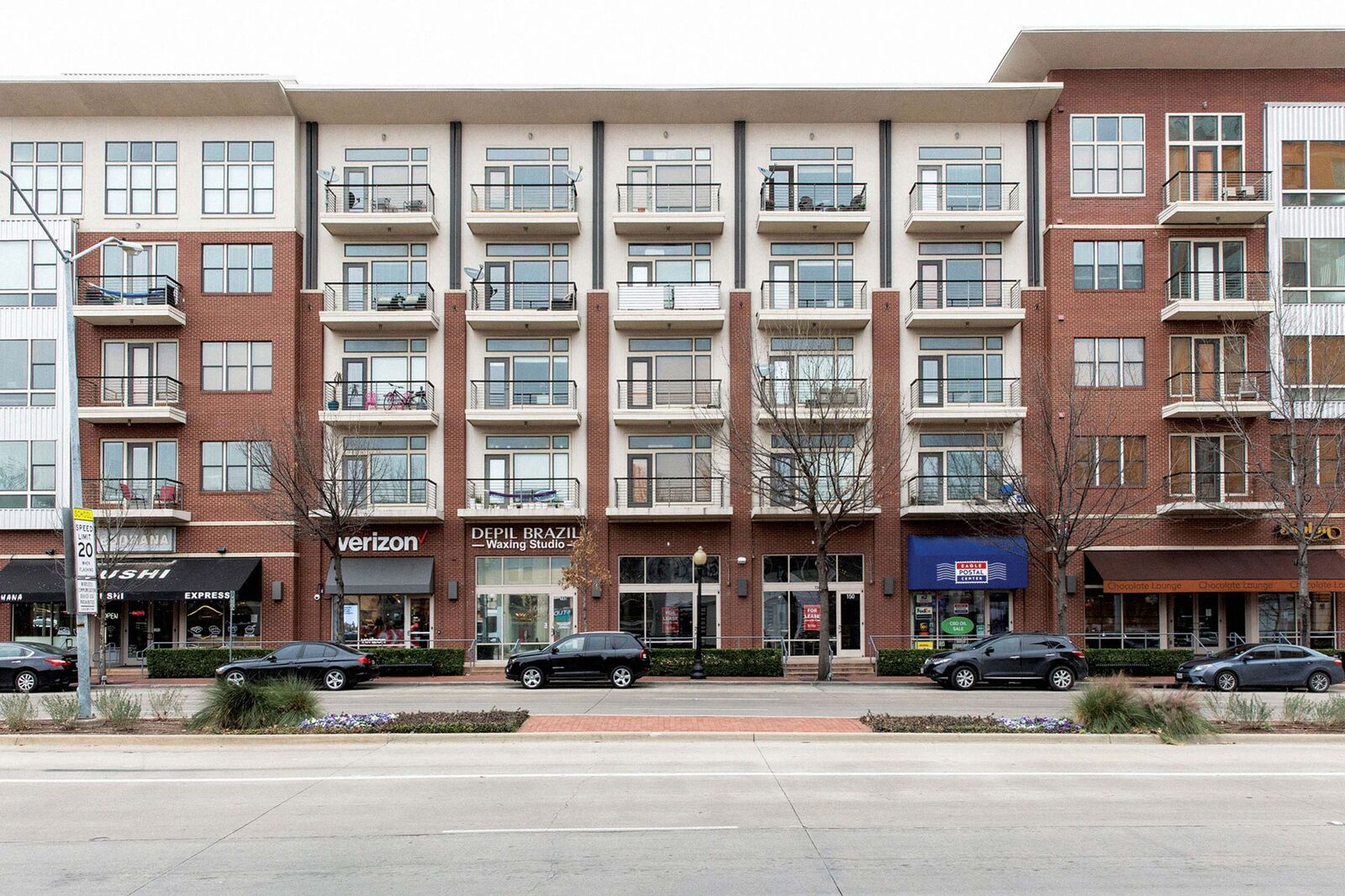
If you were wondering why all of Reston's new apartments look the same and are ugly at that, this article from Bloomberg Businessweek by Justin Fox explains it well--and identifies a key risk.

Here are some key excerpts:


Cheap stick framing has led to a proliferation of blocky, forgettable mid-rises—
and more than a few construction fires.

 In the U.S., stick framing appears to have become the default construction method for apartment complexes . . . . The big reason is that it costs much less—I heard estimates from 20 percent to 40 percent less—than building with concrete, steel, or masonry. Those industries have sponsored several studies disputing the gap, but most builders clearly think it exists. . . .

These buildings wouldn’t be going up if no one wanted to move in, of course. Growing demand, brought on by demographic shifts, job-growth patterns, and a renewed taste among affluent Americans for city (or citylike) living, has shaped the mid-rise boom. So have the whims of capital. Most multifamily developers build to sell—to a real estate investment trust, an insurance company, a pension fund, or some other institutional investor. These owners aren’t interested in small projects, and their bottom-line focus determines not only materials but also appearance and layout.

The need for scale dictates hulking “superblocks,” and the desire to break up these blocks a little explains the colorful panels and other exterior choices. Efficiency dictates the buildings be wide enough for “double-loaded” corridors, with apartments on both sides, but not so wide that the apartments are narrow and dark. This in turn favors a structure shaped like a right-angled U, C, E, or S. Two- or three-bedroom apartments work best at the corners, so one-bedrooms and studios predominate. . . .

The advance of the mid-rise stick building has come with less fanfare, and left local officials and even some in the building industry surprised and unsettled. “It’s a plague, and it happened when no one was watching,” says Steven Zirinsky, building code committee co-chairman for the New York City chapter of the American Institute of Architects. What caught his attention was a blaze that broke out in January 2015 at the Avalon apartments in Edgewater, N.J., across the Hudson River from his home. “When I could read a book in my apartment by the flame of that fire,” he says, “I knew there was a problem.” Ignited by a maintenance worker’s torch, the fire spread through concealed spaces in the floors and attic of the four-story complex, abetted by a partial sprinkler system that didn’t cover those areas. No one died, but the building was destroyed.

There haven’t been many such fires in completed stick mid-rises, but the buildings have proved highly flammable before the sprinklers and walls go in. Dozens of major fires have broken out at mid-rise construction sites over the past five years. Of the 13 U.S. blazes that resulted in damages of $20 million or more in 2017, according to the National Fire Protection Association, six were at wood-frame apartment buildings under construction. . . .

Thursday, January 21, 2016

To Reverse Ridership Declines, Metro Pins Hopes On Development Around Stations, WAMU, January 19, 2016

Martin DiCaro, WAMU's transportation reporter, wrote an excellent article on Metrorail's hopes that development around its stations will increase ridership, citing Reston's Wiehle Station area as an example.  The "hope" is based on a transportation study done by the University of Maryland showing that jobs and residences near Metro contribute to its ridership base.  We would put two caveats on that result:
  • Jobs and new residences must be created.  In the current national political climate of reduced federal spending, it is not at all clear when (or if) the Washington area's growth--well behind national averages--will increase.
  • Metro must be safe and reliable.  We hope the new general manager can make that happen, but we don't expect any significant improvements in the near term with rail car deliveries slow and the need to improve the safety of railway's infrastructure.  
Here is how DiCaro's article begins:

Will future real estate development guarantee a return of Metro’s lost riders?

The problems plaguing the second-busiest subway system in America are well-documented: an economic downturn and federal budget sequestration led to fewer rides; the reduction of a pre-tax transit benefit, provided by more than 5,000 employers, from $255 to $130 per month also contributed to the decline; and for the first time last year the transit authority admitted that consistently unreliable service — some could describe it as terrible — has alienated commuters.

Since its peak in 2008, when Metrorail recorded 750,000 trips on the average weekday, ridership is down 5 percent.
But Metro’s leaders believe riders will return, pointing to development either underway or planned within close proximity — defined as a half-mile walking distance — of rail stations across the region. Moreover, while overall ridership is down, more people are using the core stations in downtown D.C., as any regular rider can attest during a typical rush hour of packed platforms and crowded trains.

To help Metro determine how to set fares, researchers at the University of Maryland developed a new ridership model that analyzes how the location of jobs and homes will impact the system’s already strained capacity.

Click here for the rest of this article.  

Wednesday, July 24, 2013

Why not require 3 new trees for every 1 lost to development? MoCo has decided to.

The July 23 Washington Post carries an article by Bill Turque on two new ordinances approved by the Montgomery County Council that would require developers to replace every tree lost with three new ones.  Here's how the article begins:
The Montgomery County Council passed a pair of measures Tuesday intended to protect and expand tree cover along public roads and on private property where new construction has disturbed the environment.

Approval of the bills culminates several years of bargaining between the county, builders and environmentalists. One measure requires landowners who cut down a tree along a public right of way to obtain a county permit and replace the tree at or near the site. It also requires the landowner to pay into a tree replacement fund so that the county can plant two additional trees.

State law already regulates protection of roadside trees, but supporters say the county bill, sponsored by council members Roger Berliner (D-Potomac-Bethesda) and Marc Elrich (D-At Large), is more stringent.
The other measure, proposed by County Executive Isiah Leggett (D), is aimed at preventing loss of tree canopy from new home construction, especially in older downcounty neighborhoods. It requires builders to plant three trees for every one lost to construction or to pay a fee to the county. Supporters of the bill say infill development — building in the spaces within a built-up areas — has seriously eroded the tree canopy, especially in Bethesda and other older communities.
Click here for the rest of this article.

While these laws appear to focus on public roadsides and residential areas, there is no reason the same kind of law shouldn't be applied to commercial development, especially in Reston (and, preferably, the County).  Reston is already well short of County tree cover goals (despite its extensive acreage of open and natural spaces) and the County's goal is, well, modest. 

Maybe this specific idea should be included in the new Reston Master Plan if the BOS is loathe to pass a County ordinance with a similar requirement. 

Wednesday, March 27, 2013

Office Space Per Worker Will Drop to 100 Square Feet or Below for Many Companies Within Five Years, According to New Research From CoreNet Global, February 28, 2012

This is important for those interested in the Reston planning process (and, for that matter, the Tysons process) because the County is currently planning for 300 gross square feet (GSF) per office worker. 

In Reston, office space currently 85% of all non-residential space and it is the intent of the Task Force to increase that substantially around the Metrorail stations.  However, while we may want to target a certain high level of office workers for Reston's station areas, we do not want to offer two- or three-times the space those workers may attract.  In this Dillon Rule state, any space allocation given in the planning and zoning process becomes a "by right" landowner development opportunity.  We need to avoid allowing too much office space development in Reston because of its impact on the jobs:housing (J:HH) ratio which, in turn, creates added congestion, environmental damage, increased transportation infrastructure costs, and more. 

RCA has taken the position that the office space per worker should not exceed 200 GSF/employee.  This is a generous allocation given the trends reported by CoreNet Global.  On the other hand, we anticipate developers and their attorneys on the Reston Task Force will be deeply upset if Comprehensive Plan language reduces their development opportunities by one-third. 
ATLANTA, Feb. 28, 2012 /PRNewswire/ -- New data released today from CoreNet Global show for the first time that for many companies, the average allocation of office space per person in North America will fall to 100 square feet or below within the next five years.
By 2017, at least 40% of the companies responding indicated they will reach this all-time low benchmark of individual space utilization, which has been the case in Europe for the past several years but is now heading for the Americas.
The average for all companies for square feet per worker in 2017 will be 151 square feet, compared to 176 square feet today, and 225 square feet in 2010.
"The main reason for the declines," said Richard Kadzis , CoreNet Global's Vice President of Strategic Communications, "is the huge increase in collaborative and team-oriented space inside a growing number of companies that are stressing 'smaller but smarter' workplaces against the backdrop of continuing economic uncertainty and cost containment."
CoreNet Global, which conducted the survey, is the worldwide association for corporate real estate and workplace professionals.
Today, just 24 percent of the respondents reported that the average space per office worker is 100 square feet or less; however, 40 percent reported that within five years, the average space per office worker would be 100 square feet or less.
It is clear that the amount of space dedicated solely to specific employees is steadily shrinking. A majority of the respondents, 55 percent, reported that square feet per worker has already decreased between 5 and 25 percent over the last five years. . . .
Click here for the rest of this press release.  The full survey results study is available to CoreNet Global members; membership is expensive.

According to the press release, "CoreNet Global is the world's leading association for corporate real estate (CRE) and workplace professionals, service providers, and economic developers. Our more than 7,000 members, who include 70% of the top 100 U.S. companies and nearly half of the Global 2000, meet locally, globally and virtually to develop networks, share knowledge, learn and thrive professionally."