Reston Spring

Reston Spring
Reston Spring
Showing posts with label Civic Groups. Show all posts

Thursday, December 12, 2013

Colin Mills: Building Community, Face to Face, RestonNow, December 12, 2013

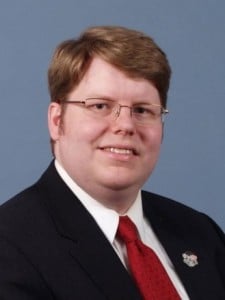
Colin Mills/File photoWinter has come early this season! Being a snow lover, I welcome this early taste of the white stuff.

Certainly, it’s a welcome change from the largely barren winters we’ve had the last couple of years. The snow and ice meant a surprise four-day weekend for my daughter Leslie.

For my wife and me, this meant working from home.

While I was tapping away on my computer and watching the flakes fall, I thought about the phenomenon of telecommuting. It’s pretty remarkable that technology has advanced to the point where we can be practically as productive outside the office as in it.

One of Bob Simon’s founding principles for Reston was that “the people be able to live and work in the same community.” In a way, telecommuting is the ultimate version of that goal: people living and working in the same house. And there are people who think that this is the future: widespread telecommuting will be what saves us from traffic paralysis and environmental degradation.
Maybe they’re right. But the move toward telecommuting is emblematic of a troubling trend in our society, toward less face-to-face human interaction. That trend runs the risk of damaging our sense of community.

We live in an increasingly atomized society; we spend less and less time in the company of others. For a lot of folks, life is a continuous cycle: from home to work to shopping and back home again. With the new self-checkout feature at grocery stores, you can get in and get out without having to talk to another person at all. It’s a lonely way to live.

Civic and fellowship organizations are a lot less popular than they used to be; so is going out for bridge night. Many of today’s leisure activities can be done at home alone (video games, surfing the Internet, etc.). Lots of people work out at the gym, but that’s a solitary pursuit too, a time to plug in the headphones and unwind from (or get ready for) the day.
The office is one of the few places where we really spend time with people outside of our families anymore. If we’re no longer going into the office every day, what happens then? We are social creatures; instant messaging and video conferencing aren’t a real substitute for face-to-face contact as our primary source of human interaction.

Moreover, that’s not how you build and sustain a community. A community isn’t a group of individuals holed up in their hives; it only happens when people come together. Interaction and relationships are how communities are built. In a world where people tend to be more isolated than ever, we need to explore other ways to bring people together.

Fortunately, in this way as in many others, Bob Simon was ahead of his time. By developing village centers that were built around plazas, he created spaces that fostered human interaction. Plazas force us out of our cars, and they increase the likelihood of chance encounters between neighbors, friends, and strangers. They are a breeding ground for community.

Plazas also serve as a staging ground for festivals, which are a great opportunity for bringing people together. Lake Anne Plaza is Reston’s best example of this. It was the original home of the Reston Festival, and today it’s the home to celebrations from Founder’s Day to the Multicultural Festival to the Jazz Festival. Not to mention the Farmer’s Market, where I run into at least a few people I know every time I go. If you want to bring a community together, you need to have spots for them to gather.

I remember the plazas well from my youth. We lived closest to Tall Oaks, so I spent plenty of time walking through their on my way to get baseball cards or sodas from Giant. But I remember being especially taken with the plaza at Hunters Woods; the multi-colored flags hanging from the pergola-style roof always made me feel like I was in a foreign country, somewhere European, perhaps.
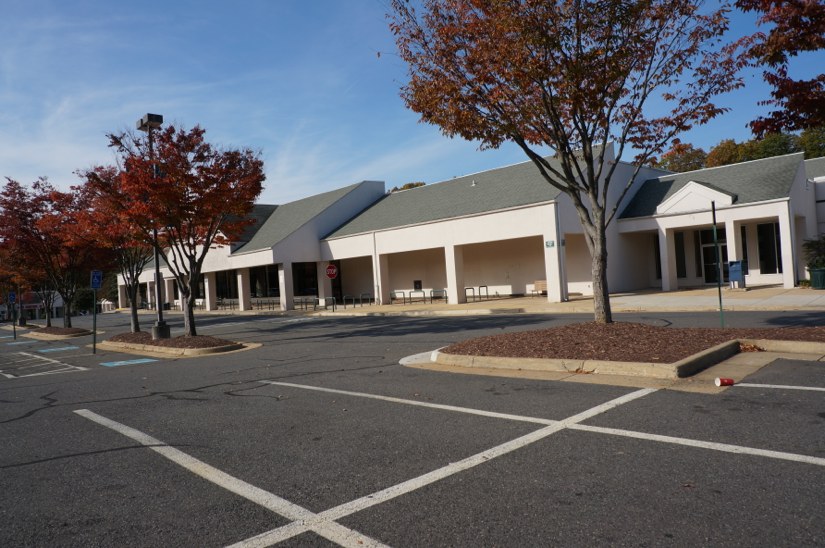
Empty Tall OaksUnfortunately, many of our village centers have abandoned this original concept; today, all of them besides Lake Anne are strip malls rather than village centers. That may make them more efficient places to shop, but it’s not good for encouraging people to interact. The heart of the “village center” concept is that it’s not just a place to shop, but a place for people to commune.

I’m hoping we can bring the plazas back as Reston redevelops. And I’m not the only one. During the Master Plan Task Force, Bob was a big proponent of making central plazas a part of any Village Center redevelopment. RCA strongly supports Bob’s suggestion. Community is created when people come together. Bob was right 50 years ago, and he’s still right today: plazas help make that happen.

And as I’ve suggested in the past, perhaps we should start with Tall Oaks. If ever a village center needed a shot in the arm, a reason to get people to come, it’s that one. If we re-envisioned Tall Oaks around a community amenity like a plaza, or an amphitheater, or a public park, we’d be creating something truly distinctive. Tall Oaks would have a genuine draw for the first time in years, a reason for people to seek it out. Maybe we could even hold a revived Reston Festival at the revived Tall Oaks. The possibilities are endless.

Many things about modern life are individualized and isolating. There’s not much that we can do about that, but we can help mitigate it by creating common spaces for people to gather and interact with each other. These spaces were a hallmark of Reston in its beginning; with thoughtful planning and redevelopment, we can get back there again. I hope to see you all someday at the plaza in one of our revitalized village centers. Communicating online is nice, but it’s even better if we can talk face-to-face.

Also, time’s running out for Citizen of the Year nominations! The deadline is Sunday, so if you haven’t submitted yours yet, download the form and get writing.

Colin Mills is the president of the Reston Citizens Association. He writes weekly on Reston Now.

Monday, November 12, 2012

What attaches people to their cities? Knight Foundation Report, 2010

 We’ve seen now why attachment is an important metric for communities, since it links to key outcomes like local economic growth (GDP). So, the next obvious question is: what drives attachment? After three years of research, the results have been very consistent, and possibly surprising.
. . . While the economy is obviously the subject of much attention, the study has found that perceptions of the local economy do not have a very strong relationship to resident attachment. Instead, attachment is most closely related to how accepting a community is of diversity, its wealth of social offerings, and its aesthetics (emphasis added). This is not to say that jobs and housing aren’t important. Residents must be able to meet their basic needs in a community in order to stay. However, when it comes to forming an emotional connection with the community, there are other community factors which often are not considered when thinking about economic development. These community factors seem to matter more when it comes to attaching residents to their community. . . .
To read the overview of this research effort and gain access to the full Knight Foundation report, please click here.  

You can read the full report by clicking here. 

Or watch the 8-minute video below for an overview.  


As yourself:  Are we achieving this in Reston?  . . . at Tysons?  . . . in the County as a whole? 
 

Thursday, June 9, 2011

Letter: Beware What Lies Beneath: Reston Planning, Reston Patch, June 9, 2011, Terry Maynard

The following is a letter I sent to Reston Patch responding to John Lovaas' commentary last week about the lull in Reston Task Force efforts.  

Last week, my friend John Lovaas wrote here at Reston Patch about the seeming lull through the November elections of the Reston Master Plan Special Study Task Force in re-shaping future development around Reston’s prospective Metrorail stations.   I have a slightly different perspective.

 John is looking at the doldrums of a smooth tropical sea under a hot summer sun kept calm so as not to disturb the natives until elections for Fairfax County Supervisor are behind them.   Nothing seems to be moving.  It is like a large azure sheet stretching to the horizon and floating on a soft inviting bed.  A slight ripple in the surface is just enough to rock one to sleep.

 What he left out I believe is the trouble—and the opportunities—that lie beneath.
The developer barracudas and their accomplices, the land use attorney sharks, on the task force are working day in and day out to kill constraints on their development.

 Over the last couple of months, they have even proposed an “x-factor” (I kid you not!)—which essentially would mean no effective guidance or constraints on how much and what should be developed around Reston’s Metro stations.

It is a theme they have played throughout the process—“maximum flexibility.”   For developers and their attorneys, that means allowing very high-density commercial development, little residential development, and little or no attention to infrastructure—roads, parks, recreation, schools, workforce housing, the environment, etc.

 More worrisome, the county’s planning staff seems to have bought in to this concept at some level with its “flexible plan framework,” presenting its own version of that idea to the Task Force’s Steering Committee within the last few weeks.  

 In contrast, Fairfax County policy and the bulk of urban planning research on Transit-Oriented Development (TOD)—ostensibly what is being proposed for Reston Metro station areas—call for a balance between workers and residents in TOD areas to maximize use of public transit and minimize congestion and environmental degradation.

 And much research points to the need for residential use to predominate.   For example, recent comprehensive research by the University of Maryland’s Center for Transit-Oriented Development (CTOD) shows that the most “performance effective” TOD areas are “high residential” areas, that is, areas with more than two residents for each worker.  A local survey by WMATA of Metrorail ridership supports the nationwide conclusions reported by CTOD.

 Two of the Task Force’s own members—Fred Costello, an engineer, and Joe Stowers, an urban planner—have even written well-documented papers for the Task Force highlighting the need for a balanced mix of workers and residents. 

 But the barracudas and sharks are ignoring them as much as possible.  

 Besides the barracudas and the sharks, however, there is a beautiful seascape of coral reefs beneath the surface of this calm tropical summer sea.   These reefs, with their highly diverse and colorful flora and fauna, not only live together, but do so in a synergistic manner that serves them all better.

 That is what we should be looking for, indeed insisting upon, in Reston’s TOD areas.  Aside from a one-to-one mix of workers and residents, we should be pursuing abundant natural, recreational, and cultural opportunities—some of which the Reston Citizens Association’s Reston 2020 Committee detailed in its alternative vision for Reston Town Center, for example.

Because Reston’s political leaders have not and will not pursue these opportunities, it is time for Reston’s civic leaders—Reston Association (RA), Reston Citizens Association (RCA), and Alliance of Clusters and Homeowners (ARCH) for starters— to step up and demand the things that will continue to make Reston a livable planned community.

 This includes manageable levels of density, a diverse mix of uses, a complete community of culture, recreation, education, nature, and mobility.  Not to do so could easily turn the Dulles Corridor area into a gridlocked maze of cheek-by-jowl glass and concrete cube office buildings more closely resembling Arlington’s Crystal City than a premier planned community.

 We need to develop a diverse, synergistic trio of TOD station areas for Metrorail similar to a healthy tropical coral reef, not a Caribbean carnivore “killing field”—and certainly the barracudas and sharks want to make a killing.

 And, lest we forget, Reston had a similar “lull” experience just four years ago.  After years of community meetings, charrettes, and committees, the summer of 2007 was extremely quiet in the planning of the re-development of the Lake Anne Village Center area.

 Then, faster than you can say “high-density, high-rise commercial re-development,” the Fairfax County Planning Commission and Board of Supervisors passed a revised plan and zoning ordinance right after that year’s supervisor election.  That decision over the complaints of the area’s citizens will see Lake Anne become the focal point of congestion, environmental degradation, infrastructure shortfalls, and more, in the decades ahead—unless Reston’s TOD areas end up worse.

 You can help prevent this outcome by becoming informed and involved.  You can start by attending the June 14 meeting of the Task Force, 7:30 PM, at Langston Hughes Middle School to hear what’s on the table.  And work with RCA’s Reston 2020 Committee, one of RA’s advisory committees, ARCH’s Issue Committee, or speak up at future Task Force meetings to make your views known.


 Terry Maynard
(The author is on the board of the Reston Citizens Association)