In its planned presentation to the Board of Supervisors acting as the "Board Transportation Committee" this Tuesday, December 13, FCDOT will recommend that the Board adopt Option #12, a Transportation Service District (TSD) for Reston's station areas with a tax rate of $0.021/$100 valuation. This tax will apply to all property owners in the station areas, including residents.
Below is the full FCDOT presentation. The recommendation is highlighted on p. 16.
Although the initial tax rate would be set at $0.021/$100 valuation, there is absolutely no restriction on the Board raising that rate (just like property tax rates) as transportation improvement costs rise. Moreover, as assessed property rates rise, the cost to residents will increase with appreciation. (Note: As we documented just last month, early estimates of major roadway improvement costs routinely double and triple in a very short period of time.)
Despite FCDOT's assertion of broad endorsement of this tax, no community representative from the Metro station areas has served on the Reston Network Analysis Group (RNAG). The only Restonian who lives in these areas serving on the RNAG is a stakeholder representative who is a paid representative of Boston Properties as Executive Director of the Reston Town Center Association. This is truly taxation without representation.
Reston Spring

Reston Spring
Showing posts with label Grid of Streets. Show all posts
Showing posts with label Grid of Streets. Show all posts
Sunday, December 11, 2016


Wednesday, November 9, 2016
Thursday, September 15, 2016
The Proposed Reston Transportation Tax is a Fraud
“The simplest explanation is usually the best one.” Occam’s Razor
For the better part of a year, the Fairfax County Department
of Transportation (FCDOT) has been trying to persuade a group of Restonians
called the Reston Network Analysis Group (RNAG) appointed by Supervisor Hudgins
that some or all of Reston homeowners need to pay an added tax to improve the
road networks around the Metrorail stations.
The need to improve the roads and intersections, FCDOT says,
is obvious because of all the development that will be going on around these
station areas in the decades ahead and, of course, Restonians should pay at
least a share for those road improvements.
In fact, FCDOT continues, we have the model established in Tysons were
residents are paying added taxes to help defray the costs of roadway
improvements there.
FCDOT is so convinced of the importance of Restonians paying
an added property tax to help cover the cost of these improvements that it has
offered up no less than ELEVEN different tax scenarios for the resident RNAG to
consider.

All of these 11 scenarios somehow relate to how the taxes at
Tysons were developed, which is irrelevant to Reston unless, unbeknownst to us,
whatever features the Tysons’ model(s) have are written on a stone tablet and
brought down from the mountain top. What
about the models for other redevelopment areas such as Baileys Crossroads, Seven
Corners, or the linear Highway 1 re-do in Mt. Vernon? Reston is, in fact, its own beast with its
own features, needs, opportunities, issues, and goals—and it is unclear that
any of these characteristics are the same as they are in Tysons. Yet
FCDOT and RNAG have never taken a minute to examine these issues. FCDOT has just presumed that whatever fits in
Tysons will fit in Reston.
Moreover, all eleven scenarios are complex involving
different types of improvements, share splits between public and private
(which, of course, don’t line up with citizens normal understanding of those
two terms), residential versus commercial, and so on. The only reason to introduce all these
complications is to confuse the issue of who should pay for the roadway
improvements by focusing on irrelevant issues.
It is very much like a three-card Monte or shell game: Introduce a lot of motion (or commotion) and
re-direct attention to confuse the mark.
The bottom line is that there is no compelling reason that Restonians should pay any added property
or other taxes whether through a tax service district (TSD) covering the
transit station areas (TSAs) or a special tax district (STD—a la the Reston
Community Center STD) covering all Reston.
Using Occam’s razor, that a simple, straightforward explanation is the best one, we
believe the best answer to financing the needed roadway improvements is, “Those who benefit financially from the
Reston roadway improvements should contribute financially to their implementation.” There are three parties to this effort: The County, the developers, and the
residents.
- The County will benefit financially from new property tax and other tax flows (eg—sales tax revenues from new retail businesses) created by the new development in the TSAs.
- The developers will benefit to the tune of billions of dollars from the added rent income from their new development as well as the continuing profits from existing development.
- The residents will receive absolutely no financial benefit.
In contrast, Reston’s residents are guaranteed to see worse
transportation capabilities. FCDOT has
guaranteed this by setting a lower standard for managing peak traffic flows
that will not only hurt those who live in the TSAs, but those Restonians and
others who travel to or through them.
Moreover, they are also guaranteed worse local bus transit service
because FCDOT states that it will not increase local bus service, just move the
existing routes around. So, yes, the
goal of the County is to make moving around Reston more difficult, but it still
it wants to charge some or all Restonians a tax for this more limited
capability.
The only reasonable and honest rationale for the new Reston
transportation tax—again, using Occam’s Razor to look for a simple,
straightforward explanation—is that the County Board wants to create a new
property tax revenue stream that it can adjust, meaning increase, at its prerogative
anytime indefinitely.
In short, the
elaborate financial calculations and manipulations by the FCDOT for the RNAG are
simply a ruse—a straight-up fraud—to
create a new property tax revenue stream for the County that is unlikely to be
spent in full in Reston and will definitely make Reston mobility more difficult.
Act to stop it while you can. Write
to:
- Tom Biesiadny, FCDOT Chief
- Kristin Calkins, FCDOT RNAG Project Manager
- Supervisor Hudgins
- Andy Sigle, RNAG Chair
- Cate Fulkerson, RA CEO
- Sridhar Ganesan, RCA President
Thursday, May 12, 2016
FC Transportation backs off from proposed Reston-wide tax for road improvements.
We have received a copy of the following e-mail from Janet Nguyen, Fairfax County Department of Transportation:
As we have stated before, we do not believe the residents of Reston--or any portion of Reston--should be forced to pay taxes that are used solely for the purpose of subsidizing developers profits, which is exactly the case here. With forecast profits for Reston TSA developers over the next 40 years of more than $50 billion, the developers can easily absorbed the full $2.6 billion in road improvement costs (about 5% of their future profit) FCDOT anticipates will be needed. Restonians, including TSA residents, gain nothing financially from the roadway improvements; in fact, FCDOT's explicit goal is to increase congestion on TSA roads to discourage driving!
Yes, the transportation tax TSA Restonians would be forced to pay under Option 4 & 5 to "improve" roads would be used to drive them out of their cars--not improve their driving experience.
From: Nguyen, Janet L <Janet.Nguyen@fairfaxcounty.gov>
Date: Tue, May 10, 2016 at 12:57 PM
Subject: Advisory Group - Funding Updates
To: Andy Sigle <awsigle@gmail.com>, Bill Keefe <wkeefe@ldn.thelandlawyers.com>, "Cate Fulkerson (RA)" <Cate@reston.org>, Delores Bailey <summatra@aol.com>, "John Mossgrove (jmossgrove@merrittproperties.com)" <jmossgrove@merrittproperties.com>, Liana Kang <liana.kang@yahoo.com>, Maggie Parker <mdparker@comstockpartnerslc.com>, "Mark Looney (RCC)" <mlooney@cooley.com>, "Matt Valentini (JBG)" <mvalentini@jbg.com>, "Robert Goudie (RTC)" <RGoudie@restontc.org>, Tim Cohn <tim@timcohn.com>
Cc: "Johnson, Carroll R" <Carroll.Johnson@fairfaxcounty.gov>, "Kanownik, Kenneth J." <Kenneth.Kanownik@fairfaxcounty.gov>, "Biesiadny, Tom" <Tom.Biesiadny@fairfaxcounty.gov>, "Davis, Jr, Paul L." <Paul.DavisJr@fairfaxcounty.gov>, "Calkins, Kristin" <Kristin.Calkins@fairfaxcounty.gov>
As indicated by the sentences we have highlighted, FCDOT is dropping its proposal to RNAG to tax the entirety of Reston for road improvements and additions required by the planned intense development in the Transit Station Areas. That said, FCDOT has NOT dropped the option to tax the residents of the TSAs (Options 4 & 5).
All,Just wanted to give the group an update about work on the funding plan. In the April meeting, staff discussed various scenarios for funding an example private share of the funding plan. The scenarios included use of a road fund or a road fund in combination with a service or tax district:Road Fund Only
- Use Tysons residential rates (Tysons-wide and Tysons grid combined but normalized for unit size) and determine Reston commercial rate to meet need.
- Use Tysons commercial rates (Tysons-wide and Tysons grid combined) and determine Reston residential rate to meet need.
- Determine set of rates that match proportion of total residential vs. total commercial development in Reston.
Road Fund with other revenue sources (Use Tysons combined rates (in option 1 and 2) and…
- Fills gap with a service district over Reston TSAs (all properties).
- Fills gap with a tax district over Reston TSAs (C&I Only).
Fills gap with a service district over Reston and Reston TSAs.Fills gap with a service district over Special Tax District 5.After further analysis, scenario 6 and scenario 7 have been removed from consideration. This announcement will also be made at the Reston Network Analysis public meeting scheduled to be held on Wednesday, May 18th. Staff hopes to schedule the next advisory group meeting for funding in June.Janet NguyenCoordination and FundingFairfax County Department of TransportationT: 703.877.5770, TTY 711
As we have stated before, we do not believe the residents of Reston--or any portion of Reston--should be forced to pay taxes that are used solely for the purpose of subsidizing developers profits, which is exactly the case here. With forecast profits for Reston TSA developers over the next 40 years of more than $50 billion, the developers can easily absorbed the full $2.6 billion in road improvement costs (about 5% of their future profit) FCDOT anticipates will be needed. Restonians, including TSA residents, gain nothing financially from the roadway improvements; in fact, FCDOT's explicit goal is to increase congestion on TSA roads to discourage driving!
Yes, the transportation tax TSA Restonians would be forced to pay under Option 4 & 5 to "improve" roads would be used to drive them out of their cars--not improve their driving experience.
Tuesday, April 19, 2016
Op-Ed: Reston Transportation Tax Proposal is Grotesque County Corporate Welfare, RestonNow, April 18, 2016
The following is a re-post from RestonNow.
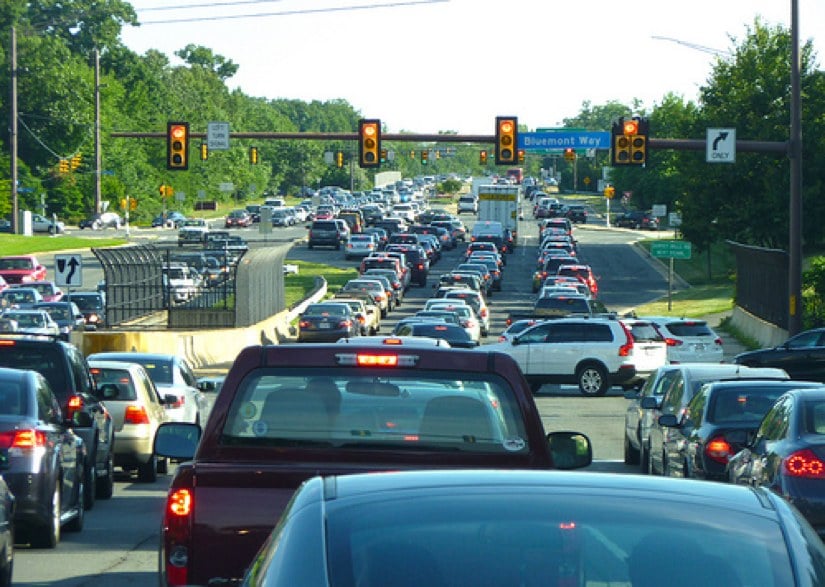 Restonians are once again faced with the prospect of the burden of an added local “tax service district that
could add hundreds of dollars to their annual property tax bill every
year. The one we already have, Small Tax District 5, supports our Reston
Community Center in providing cultural and educational activities for
the community. The proposed new one would solely subsidize developer
profits while increasing county tax revenues.
As this discussion continues, Reston Association has shared a questionnaire online with its weekly RA NewsLine (click on “Transportation Tax Survey) for residents to provide feedback on the Reston special transportation tax district idea. I urge all Restonians to vote “NO.” The following provides an explanation why.
The basis for the proposal lies in planned development in Reston’s station areas, growth that will exclusively benefit Reston’s station area landowners. Assuming that all Reston developers are as successful as Boston Properties per its 2015 annual report, their likely profit will total more than $53 billion over 40 years after building costs. That includes more than $9 billion from their future development as well as more than one billion dollars per year from their existing Reston holdings. That is an average of $1.3 billion per year!
Yet these same developers, backed by the County, want Reston homeowners to pick up as much as half of the $2.6 billion tab — about $65 million per year — for needed station area road improvement even though their total cost will be less than three percent of their profit from their Reston properties over the next 40 years.
The forecast annual road improvement cost is less than five percent of the future annual profits of the Reston station area landowners and can be easily absorbed as part of their investment in offsetting the impact of their development, but the County is proposing that residents pay some of the road costs.
One of the transportation tax options the County has proposed is that all Reston homeowners pay $.025/$100 residential property valuation to help defray the road improvement costs. Today, with the average Reston home valued at $428,000, the added cost of that Reston special tax would be $107 per year to start. This special tax would be in addition to the average $202 Restonians already pay to operate the Reston Community Center, a County public facility committed primarily to Restonians’ use.
With 3 percent annual appreciation in the value of a family home and/or general inflation, the average added transportation tax cost would be more than $200 per year per household over the next 40 years for an average-priced home — assuming the mix of home values remains constant (and it is more likely to increase with thousands of new high-priced condos in the station areas). On a community-wide basis, that three percent annual growth in assessments would mean the average Reston homeowner would pay more than $8,800 and the total residential community tax contribution would be more than $350 million over 40 years. And that is without any shift in housing mix or tax rate increases by the Board of Supervisors.
The Board is driving the transportation tax idea because it believes that by encouraging the growth of taxable real estate values, it can solve its budget problem. Another Reston special tax district at $.025/$100 valuation Reston-wide tax rate would bring in about $4.4 million in new revenues in the first year — and grow every year thereafter — even if there is no development. Moreover, from the Board’s perspective, to the extent these taxes encourage developers to build sooner because of lower investment costs, it will create even more high-tax value high-density real estate. It’s a win-win situation from a Board perspective: More tax revenue through subsidized corporate development.
And all of that special Reston tax money would go to Reston’s station area landowners in defraying the road infrastructure costs of their for-profit development. Specifically, the taxes would be used to improve roads that go to, from, within, and through the station areas to serve developer properties that would be required for their profitable high-density development. Yet–
The ultimate irony of this road “improvement” tax proposal is that the County literally promises worse congestion as a desirable traffic “goal.” So Restonians will be taxed to experience worse congestion, even those who only drive through the station areas, say, on Wiehle to/from the Dulles Toll Road, with no intention of visiting them.
The bottom line is that the transportation tax proposal completely detaches who pays the tax from who benefits from it. Residents pay more for less usable roadways; developers pay less and profit more. It is unfair and inequitable to Restonians by any measure.
The idea that taxing Reston homeowners, whether they live in the station areas or beyond, because they will garner some unidentified, much less quantifiable, “benefit” from the development there is a deceptive scheme and the County knows it. The proposed County transportation tax is, in fact, nothing more than grotesque corporate welfare, the Reston property owner paying more taxes so major Reston developers can increase their profits and the County can increase its tax revenues.
The transportation tax idea should be opposed vigorously by the Reston community, the RA Board of Directors and other community leaders and organizations, the County-appointed RNAG advisory group examining Reston’s transportation options, and ultimately the Board of Supervisors itself. Do what you can now:
Terry Maynard
Reston
Op-Ed: Reston Transportation Tax Proposal is Grotesque County Corporate Welfare
This is an op-ed by Reston resident Terry Maynard. It does not reflect the opinion of Reston Now. Something on your mind? Send a letter to news@restonnow.com.Restonians are once again faced with the prospect of the burden of an added local “tax service district that
could add hundreds of dollars to their annual property tax bill every
year. The one we already have, Small Tax District 5, supports our Reston
Community Center in providing cultural and educational activities for
the community. The proposed new one would solely subsidize developer
profits while increasing county tax revenues.As this discussion continues, Reston Association has shared a questionnaire online with its weekly RA NewsLine (click on “Transportation Tax Survey) for residents to provide feedback on the Reston special transportation tax district idea. I urge all Restonians to vote “NO.” The following provides an explanation why.
The basis for the proposal lies in planned development in Reston’s station areas, growth that will exclusively benefit Reston’s station area landowners. Assuming that all Reston developers are as successful as Boston Properties per its 2015 annual report, their likely profit will total more than $53 billion over 40 years after building costs. That includes more than $9 billion from their future development as well as more than one billion dollars per year from their existing Reston holdings. That is an average of $1.3 billion per year!
Yet these same developers, backed by the County, want Reston homeowners to pick up as much as half of the $2.6 billion tab — about $65 million per year — for needed station area road improvement even though their total cost will be less than three percent of their profit from their Reston properties over the next 40 years.
The forecast annual road improvement cost is less than five percent of the future annual profits of the Reston station area landowners and can be easily absorbed as part of their investment in offsetting the impact of their development, but the County is proposing that residents pay some of the road costs.
One of the transportation tax options the County has proposed is that all Reston homeowners pay $.025/$100 residential property valuation to help defray the road improvement costs. Today, with the average Reston home valued at $428,000, the added cost of that Reston special tax would be $107 per year to start. This special tax would be in addition to the average $202 Restonians already pay to operate the Reston Community Center, a County public facility committed primarily to Restonians’ use.
With 3 percent annual appreciation in the value of a family home and/or general inflation, the average added transportation tax cost would be more than $200 per year per household over the next 40 years for an average-priced home — assuming the mix of home values remains constant (and it is more likely to increase with thousands of new high-priced condos in the station areas). On a community-wide basis, that three percent annual growth in assessments would mean the average Reston homeowner would pay more than $8,800 and the total residential community tax contribution would be more than $350 million over 40 years. And that is without any shift in housing mix or tax rate increases by the Board of Supervisors.
The Board is driving the transportation tax idea because it believes that by encouraging the growth of taxable real estate values, it can solve its budget problem. Another Reston special tax district at $.025/$100 valuation Reston-wide tax rate would bring in about $4.4 million in new revenues in the first year — and grow every year thereafter — even if there is no development. Moreover, from the Board’s perspective, to the extent these taxes encourage developers to build sooner because of lower investment costs, it will create even more high-tax value high-density real estate. It’s a win-win situation from a Board perspective: More tax revenue through subsidized corporate development.
And all of that special Reston tax money would go to Reston’s station area landowners in defraying the road infrastructure costs of their for-profit development. Specifically, the taxes would be used to improve roads that go to, from, within, and through the station areas to serve developer properties that would be required for their profitable high-density development. Yet–
- If the developers believe they will earn an adequate return on their investment, they will build the roads needed to help make their new construction profitable anyway without a special Reston residential tax subsidy.
- If they choose not to build for whatever reason, then Reston won’t need improved roadways (except to meet existing standards) and, therefore, we won’t need any added transportation taxes.
The ultimate irony of this road “improvement” tax proposal is that the County literally promises worse congestion as a desirable traffic “goal.” So Restonians will be taxed to experience worse congestion, even those who only drive through the station areas, say, on Wiehle to/from the Dulles Toll Road, with no intention of visiting them.
The bottom line is that the transportation tax proposal completely detaches who pays the tax from who benefits from it. Residents pay more for less usable roadways; developers pay less and profit more. It is unfair and inequitable to Restonians by any measure.
The idea that taxing Reston homeowners, whether they live in the station areas or beyond, because they will garner some unidentified, much less quantifiable, “benefit” from the development there is a deceptive scheme and the County knows it. The proposed County transportation tax is, in fact, nothing more than grotesque corporate welfare, the Reston property owner paying more taxes so major Reston developers can increase their profits and the County can increase its tax revenues.
The transportation tax idea should be opposed vigorously by the Reston community, the RA Board of Directors and other community leaders and organizations, the County-appointed RNAG advisory group examining Reston’s transportation options, and ultimately the Board of Supervisors itself. Do what you can now:
- Vote “NO” to the transportation tax in RA’s online survey
- Attend Supervisor Hudgins’ “Reston . . . Blueprint for the Future” Open House this Wednesday, April 20, 6-8:30 p.m., South Lakes High School, and tell county officials and developers what you think.
- Let Reston’s leaders know of your disapproval of this dishonest and unfair proposal.
Terry Maynard
Reston
Monday, February 8, 2016
Keeping Tabs on the Reston Network Analysis Group
The Reston Network Analysis Group has been meeting for three months, but little of what it has heard or said has been broadly shared with Restonians although some of what it has heard is on the County's Reston Network Analysis Group webpage. So, we have decided to make available to you the presentations and minutes of the RNAG meetings on this blog so you can keep track of what is going on. Where possible, we'll try to provide a brief overview of each of the presentations here.
Presentations
Reston Network Analysis--2050 Unmitigated Results--January 11, 2016
Reston Network Analysis--2050 Unmitigated Results--January 15, 2016
September 15, 2015 Minutes
Presentations
Reston Funding Plan: Potential Sources for Revenue for Funding Reston Transportation Improvements, December 14, 2015
This presentation examines the various sources of revenue that may be used to fund the $2.63 billion cost of implementing Reston's major transportation improvements. Some of these require authority from the state, others do not. It describes how the Tysons infrastructure funding effort works.
Reston Network Analysis--2050 Unmitigated Results--January 11, 2016
This presentation lays out the results of FCDOT's 2050 simulation of traffic conditions in the Phase 1 (station areas plus Reston Town Center). It focuses on the major intersections, which broadly failing, but also includes data on the network of local streets. It also describes the "tiered approach" to mitigating traffic delays from least costly to most costly.
Reston Network Analysis--2050 Unmitigated Results--January 15, 2016
It is not clear what difference there is between this copy of the presentation and the one above.Reston Network Analysis--Community Kick-Off, February 1, 2016
This is the briefing FCDOT provided a community meeting on the RNAG's efforts. It describes the Phase 1 Comprehensive Plan that is driving the work of RNAG and concurrent Reston efforts, focusing on the need for a "grid of streets" within the station areas (although little of the preceding suggests RNAG has discussed the grid very much). It provides an overview of the traffic conditions current and future plus a summary of the mitigation strategy. It describes the process with working with the community and stakeholder groups--which are different--as well as the public.Minutes
September 15, 2015 Minutes
Described as the second meeting of the RNAG (there are no earlier minutes), these minutes focused on the process for proceeding with the study.November 9, 2015 Minutes
The meeting seems to have focused on the existing conditions with a preliminary overview of the funding issues.December 14, 2015 Minutes
The meeting focused on the Reston funding plan presentation above.
Thursday, August 8, 2013
Traffic Jam Ahead: Level of Service Explained, Colin Mills, Reston Patch, August 7, 2013
The term "Level of Service" gets thrown around during planning discussions. What is it, and how does it affect Reston's future?
Last week’s post about office space per worker and its implications for Reston’s planning received a very favorable response. I was happy to take a complex subject and make it understandable to the average person. One of RCA’s mission is to keep citizens informed on issues that matter to our future.
One response I got contained a request for a layman’s explanation of traffic Level of Service. This bit of jargon gets thrown around a lot in planning discussions, and it seems like an important measure of traffic. But what exactly is it, and what does it mean in the context of Reston’s planning?
The concept of Level of Service is simple enough to explain. The different Levels of Service (LOS) are each assigned to a letter, from A to F. These operate like old-fashioned school grades: A is the best and F is the worst. (Unlike with school grades, there is a Level of Service E.)
These “grades” are applied to intersections. They measure the average vehicle delay, or the amount of time a car will have to wait before making it through an intersection. So for intersections controlled by traffic lights, Level of Service A means that the average vehicle waits less than 10 seconds to get through the intersection. By comparison, LOS C means that the average wait is between 20 and 35 seconds, and LOS F means the average delay is more than 80 seconds.
How do we know what the “average” delay is? For existing conditions, this is based on traffic counts. By figuring out how many cars that go through a given intersection over a period of time, it’s possible to calculate the typical delay. For future conditions, transportation engineers use sophisticated modeling software that starts with current conditions and then projects future traffic counts based on the projected future growth and development.
Easy enough so far, right? But there are some complicating factors. First, remember that Levels of Service are applied to intersections, not roads. So there is no Level of Service that applies to, say, Reston Parkway as a whole: rather, each of its intersections has its own LOS.
Also, we’re interested in service during the peak periods, when the most vehicles are on the road. It’s nice that the intersections are free and clear at 3 AM, but for planning purposes, we care most about the times when people are getting to or from work. We often call this “rush hour,” but as most commuters know, nowadays it lasts longer than an hour. The peak period lasts about 3 to 4 hours in the morning and again in the evening; roughly 7 to 10 AM and 4 to 7 PM.
So if Levels of Services are like grades, we should be trying for an A, right? Not necessarily. As populations grow and more cars join the roads, LOS A becomes unrealistic. You simply can’t build in enough road capacity to keep traffic flowing that quickly in urbanized areas. Most urban areas set the LOS standard at D or E. The current LOS standard in Fairfax County is a D (average delay of 35 to 55 seconds). The County is considering moving to LOS E (55 to 80 seconds) for areas around Metro stations. (Why the drop? Because they’re trying to encourage walking and biking to the stations. Pedestrians and bicyclists move more slowly than cars, so giving them time to cross the street means additional intersection delays for vehicles.)
So how will Reston do on the Level of Service scale? The County’s Department of Transportation did modeling to gauge the impact of the Task Force’s current development plan (Scenario G) on Reston’s traffic. The results were not good. The worst intersections, as you would expect, are on either side of the Toll Road. These are considered Reston’s “gateway” intersections: where Sunset Hills and Sunrise Valley cross Wiehle, Reston Parkway, and the Fairfax County Parkway.
Currently, those intersections are at LOS D or E during the peak periods. If Scenario G is built out as planned, every one of those intersections except Wiehle/Sunrise Valley would earn an F. The average delay at those 6 “gateway” intersections would be over 2 minutes each. The worst of the worst, Wiehle/Sunset Hills, is forecast to have an average delay of over 4 minutes during the evening peak. An F doesn’t adequately describe that kind of backup; that’s an F-, or even F--.
It gets worse: Those projected delays assume that the County invests heavily in road construction and improvement, bus transit, and pedestrian and bike access. The forecast roadway improvements alone would cost more than $500 million. You may have noticed that governments aren’t exactly flush with cash; where’s the money going to come from?
Also, those calculations don’t take into account “spill back.” That’s what happens when an intersection is so congested that the traffic backs up through previous intersections. If you’ve tried to go south on Reston Parkway during the evening rush, you’ve experienced this first-hand. The intersection at Sunrise Valley backs up, which creates a jam for cars trying to get over the Toll Road, which worsens the backup at Sunset Hills, which creates gridlock going up past the Town Center. And that’s today; imagine how much worse it could get!
This kind of traffic nightmare is what RCA is worried about, which is why we keep banging the drum about the traffic impacts of the Task Force scenarios. Should traffic be the only factor driving Reston’s future development? Of course not. But given the amount of time most of us spend in the car, it’s an important quality of life factor.
We accept a Level of Service goal of E around the station areas; encouraging walking and biking to the stations is important, and aiming higher is probably not realistic. But E is not F, and it’s certainly not F--. If you’re going to aim for a standard of E, make it count. That’s why we argue that the revised Comprehensive Plan should specify that development is only allowed if it allows the 6 gateway intersections I mentioned earlier to maintain LOS E during peak periods.
I hope this post has shed some light on Level of Service for you non-traffic experts out there. If you have any questions, feel free to leave a comment. And rest assured that RCA will keep fighting to ensure that Reston’s future growth doesn’t bring our roads to a halt.
------------------------------------------------------------------------------------------------------------------------
Comment: . . . And it gets worse: The draft Comprehensive Plan language states, "An overall Level of Service (LOS) ‘E’ goal is expected for the street network in the Reston Transit Station Areas." "Expected"? That's not even a goal; somehow it will just happen. What does that mean?More important, the concept of a network level of service is NEVER defined. I can not find it defined in official Institute of Transportation Engineers documents either. And its definition has an incredible impact on traffic congestion in Reston:
- Does this literally mean every street intersection in the station area (soon to comprise a "grid of streets") or just the important ("gateway" is the term FC DOT uses) ones? Does include only signalized (busy) intersections?
- Does it mean the average of all traffic all-day long seven days per week, including holidays? workday peak periods? peak hour, or "peak of the peak" (highest 15 minutes)?
- Does it weight traffic by the intersection measured? The corner of Reston Parkway & Sunset Hills has a lot more traffic than the intersection of Isaac Newton Square North and West.
Friday, August 2, 2013
Notes on the Reston Task Force Meeting, July 30, 2013
Notes on the
Reston Task Force Meeting
July 30, 2013
R. Rogers
Summary: DPZ
released version 5 of the draft plan (now containing the full text including
the TOD area specifics) just
before 5PM the day of the meeting, too late for meaningful RTF comment on it. It will be discussed on 13 August. The RTF was told that if it has substantial
problems with the draft, it can take its comments to the Planning Commission.
Public Comments
Office Square footage:
Dick Rogers opened the public comment period by calling attention to the 16
July Washington Post front page article on GSA adopting smaller officer space
and “tightening up” on space use. He
noted that the county so far been resistant to 2020 urgings that the 300 SF
policy per office worker be reconsidered.
He said that the traffic implications of more workers are considerable
and that the shrinkage of office space means the jobs-housing balance in the
draft plan is all askew.
Heidi Merkel responded that DPZ has discussed this and if
2020 wants changes it can approach the Planning Commission when the draft goes
forward. She also said that the jobs
figures come from the demand projections by GMU and implied that this could
latter lead to revisions.
Patti Nicoson seemed sympathetic to the 2020 point saying that hopefully there will be points when the plan can be revised. (Comment: Under Virginia law what is given now will remain forever.)
Patti Nicoson mentioned that Metro Wiehle station opening will be delayed up to two months by WMAA and WMTA attempts to inspect properly.
Lake Anne
redevelopment was mentioned.
Although the Planning Board will review the new plan on 7 Sept it has
not been made public and has been reviewed by only a select group. However Bob Simon is reported to have said
“it is great.”
Presentation on Street
Adjustment
Representatives from Kimberly-Horn consultants discussed possible street-scape changes to Sunset Hills Road and the Reston Parkway Bridge near RTC. Their graphics—presumably on the county web site—showed ideas for narrowing lanes, building medians, and increasing sidewalks. They stressed that this would be a low cost way to increase urban access. They said they would compensate for the lane reductions by lowering speed limits.
Representatives from Kimberly-Horn consultants discussed possible street-scape changes to Sunset Hills Road and the Reston Parkway Bridge near RTC. Their graphics—presumably on the county web site—showed ideas for narrowing lanes, building medians, and increasing sidewalks. They stressed that this would be a low cost way to increase urban access. They said they would compensate for the lane reductions by lowering speed limits.
The JBG reps were very much in favor of the concept, saying it would decrease the time pedestrians would have to be in the roadway. (Comment: No suggestion was made that the real answer is a pedestrian underpass from Ridge Heights under Reston Parkway to the station)
Plan Draft V.5
This was released by DPZ to the Task force at 4:45 PM 30
July. A few people had an opportunity to
skim it. Heidi promised that “we can
have a dialogue” about this draft at the 13 August meeting.
Heidi had talking points, presumably on the website, to
highlight new elements. These include a remarkably
long 15-page section on urban standards and sections on the specific TOD areas. Heidi later said that this completes the
draft; there may be inserts and changes, but no large bodies of new text.
Re urban design, it was noted by Heidi that VDOT is
still working to develop urban standards but that the timing of their
completion is unclear. She noted that RTC was privately owned and had more latitude to
develop an urban framework
Various questions were raised. JBG rep Trimmer asked why the urban standards will not be applied more broadly. Dave Sittler, “the INOVA TF member”, asked if the references to squares and open space in the TOD sections related to park needs (implying they should be subtracted from park needs). HM said that “in some instances” they will apply. The second JBG rep, Valentini, asked why there would be 35 foot wide streets when in some case narrower would be better. Richard Kennedy asked for an overall paper outline more explicit and detailed than the one-page table of contents in order to allow members to pull all the threads together.
There is a brief implementation section of a few pages. Earlier Jerry Volloy had raised the question about what mechanism there will be for enforcement of standards and how will the Reston community be involved? Heidi said that the Reston P and Z will presumably have a role, that this in being discussed with Supervisor Hudgins, and that design review is still “up in the air.”
The issue of whether TOD
boundaries will be from station entrances or platforms was brought up. Heidi said Rae Noritake had done calculations
but no further information on them was given.
Heidi said that DPZ is trying to
think of walk times in terms of boundaries, with a 5-10 minute walk being the
limit.
The last 17 pages dealt with the TOD
areas. Robert Goudie said he had
skimmed this and found the description of North Town Center incomplete, with various features
such as a park, and consolidation of county facilities in a major county building,
being very vague. He briefly alluded to the need for more residential in Wiehle
and Herndon-Monroe and raised the issue of why hotels are counted as part of
the residential quotient.
There were no questions about the Herndon or Wiehle sections (Wiehle Sub-Committee Co-Chair Bill Penniman was absent).
Dick Rogers raised the inadequate discussion in the transportation
section of public transit,
particularly bus access. He was told that the County Transportation Development
Plan contains details and maybe this should be cross referenced.
Next
At the end of the meeting Heidi in effect challenged the RTF that if it wanted to take a different position than the DPZ draft it should be prepared to go to the Fairfax County Planning commission. (Comment: This was a new “take it or leave it” tone by her and suggests she believes she has official backing for the draft. It was also the same response Terry Maynard, RCA's primary rep to the RTF, received in an e-mail from C/BOS Sharon Bulova re office space per worker.)
There will be a 13 August meeting to discuss the draft with two further meetings set for September.
Monday, March 25, 2013
Fairfax County Could Sell Air Rights to Fight Tolls, Reston Patch, March 25, 2013
With tolls projected to increase, officials are looking into air rights sales.
Fairfax County is exploring how selling air rights could help reduce tolls on the Dulles Toll Road that are expected to shoot up with Phase II Silver Line construction.
Supervisor Pat Herrity (R-Springfield) asked staff last week to look into the cost of a study determining how much money the county could charge developers for the right to build over the Toll Road and new Silver Line Metro stations. . . .Click here for the rest of this important article.
RCA has taken the position in responding to the draft areawide Comprehensive Plan language presented to the Reston Task Force by County Staff last month that "The County must aggressively pursue air rights over the Dulles Corridor for TOD development and
the grid of streets
to
work effectively."
The County staff's response: "The subject of pursuing air rights is very complex. If the opportunity to develp the air rights over the Toll Road comes to fruition, updates to the Comprehensive Plan will be needed."
Talk about a "That's not my job" response!
Air rights are vital for both a complete grid of streets to support transit-oriented development in the station areas and to help ease the burden of tolls on Restonians and the thousands of others who use the toll road.
Subscribe to:
Posts (Atom)