The official summary of the Board's discussion and approval of the Reston Master Plan amendment:
Reston Spring

Reston Spring
Tuesday, February 25, 2014


Money on the Shelves: Jurisdictions Take Variety of Approaches to Funding Libraries, The Connection, February 20, 2014
Michael Lee Pope, the Connection newspapers, writes that Fairfax County spends less per capita and well below statewide averages on its public libraries. So, despite being the widely talked about second-wealthiest county in the country, the Board of Supervisors simply won't invest in its libraries.
Here are excerpts from the article:

The Board of Supervisors inattention to the quality of life of its residents, one measure of which may be the availability of a well-endowed public library system, has been horrible over the last half-dozen years. We hope, but do necessarily expect, that the Board's reckless record will begin to be reversed this budget cycle.
Here are excerpts from the article:
What is the future of the neighborhood library?
That's an open question as jurisdictions across America are rethinking their library system, a revaluation brought on by tight budgets and technological change. Here in Northern Virginia, jurisdictions have taken a variety of approaches to funding libraries. Some, such as Arlington, have restored almost all the funding cut during the recession. Others, such as Fairfax County, lag behind the statewide average.
"We are very concerned about this because our funding is far down behind the rest of the state of Virginia and in the entire metropolitan area as well," said Charles Fegan, vice chairman of the Fairfax County Public Library Board of Trustees. "How are we going to get books on the shelves? How are we going to get hours?" . . .
When the recession hit, all Northern Virginia jurisdictions cut back on library funding. Some have made efforts to restore funding, while others have lagged behind. Arlington had led the way in restoring almost all the hours that were cut in their neighborhood libraries, although the Central Library still opens an hour later than it used to and closes an hour earlier than it used to. But overall, Arlington's library system remains one of the best in the region. Earlier this month, the Library Journal named the Arlington Public Library one of six "star" libraries in Virginia. . .
Nowhere will the battle (for a larger public library budget) be more pitched than Fairfax County, where libraries are still working with reduced staffing and reduced collections. Members of the library's board of trustees say they are ready to make a pitch to the Board of Supervisors that it's time to restore the hours that were reduced and add back the funding for the collections.
Click here to read the full article."A library is the heart of a community," said Fegan. "I've spoken to a number of people who have come into this country, and the first thing they did was get a library card."
The Board of Supervisors inattention to the quality of life of its residents, one measure of which may be the availability of a well-endowed public library system, has been horrible over the last half-dozen years. We hope, but do necessarily expect, that the Board's reckless record will begin to be reversed this budget cycle.
Who pays how much for Bechtel's Silver Line construction failure?
Yesterday we were informed that MWAA's inspection of the construction of Phase 1 of the Silver Line, led by Bechtel Corporation, failed to meet expectations in seven of 12 categories. Much ado--and no answers--was made about how much longer it will take to get the Silver Line operating.
An equally important--maybe more important--pair of questions has not even been asked, much less answered:
The morally and ethically right way for the extra cost to be paid is for the inept builder to assume all the cost of the needed repairs after depletion of the already nearly bankrupt contract contingency fund. If that cuts into Bechtel's profits or even leads to a loss on the project, it would be right and appropriate.
On the other hand, we're talking contracts which are completely unrelated to "doing the right thing." If so, it probably means the Silver Line's "funding partners"--MWAA, Fairfax, & Loudoun counties PLUS the unrepresented Dulles Toll Road users who are being soaked with half the line's construction cost--will have to take on the burden. That could mean all those political promises (if that's not an oxymoron) hyped last year that tolls would not have to go up again for a couple of years may be thrown out to fill the gap in financing Phase 1.
It also won't help Loudoun and especially Fairfax County finances either. Fairfax County, in particular, is running close to its debt financing cap and the last thing it needs to do is divert the remaining balance from needed schools, transportation, and other projects to help finance Bechtel's failures.
So, what are the answers to these two critical questions?
An equally important--maybe more important--pair of questions has not even been asked, much less answered:
How much will the needed repairs cost?
Who will pay the cost of the repairs?
The morally and ethically right way for the extra cost to be paid is for the inept builder to assume all the cost of the needed repairs after depletion of the already nearly bankrupt contract contingency fund. If that cuts into Bechtel's profits or even leads to a loss on the project, it would be right and appropriate.
On the other hand, we're talking contracts which are completely unrelated to "doing the right thing." If so, it probably means the Silver Line's "funding partners"--MWAA, Fairfax, & Loudoun counties PLUS the unrepresented Dulles Toll Road users who are being soaked with half the line's construction cost--will have to take on the burden. That could mean all those political promises (if that's not an oxymoron) hyped last year that tolls would not have to go up again for a couple of years may be thrown out to fill the gap in financing Phase 1.
It also won't help Loudoun and especially Fairfax County finances either. Fairfax County, in particular, is running close to its debt financing cap and the last thing it needs to do is divert the remaining balance from needed schools, transportation, and other projects to help finance Bechtel's failures.
So, what are the answers to these two critical questions?
Monday, February 24, 2014
MWAA Statement Regarding Status of Silver Line Phase 1 Construction, February 24, 2014
February
24, 2014
Airports
Authority Statement Regarding
Status
of Silver Line Phase 1 Construction
Below is
a statement from the Metropolitan Washington Airports Authority
regarding the status of construction on Phase 1 of the Dulles Corridor
Metrorail Project.
"The Metropolitan Washington Airports Authority
and the Washington Metropolitan Area Transit Authority have concluded a
review of the Silver Line Phase 1 Substantial Completion Submission from
Dulles Transit Partners, and determined the contractor has not yet met
the contract requirements for substantial completion.
The contract requires the submission to meet
criteria in 12 different areas. Seven of the 12 areas were determined to
be deficient. Examples of problem areas include:
·
Failure to deliver certificates of occupancy for
almost 20 wayside buildings, including stations, power substations and
the tunnel;
·
Performance issues with the Automatic Train Control
System that prevent WMATA from beginning Operational Readiness
Testing;
·
Failure to fully correct defects that impact
operations, including track gage problems;
·
Elevator and escalator problems, and water leaks in
buildings;
·
Incomplete documentation for testing requirements
and safety/security verifications.
The Airports Authority has instructed DTP to
provide a plan and date of conclusion for addressing the outstanding
items as quickly as possible. We will work closely with DTP, WMATA and
our other partners to monitor progress and assure that all contractual
obligations are satisfied.
Substantial completion is a major milestone in the
process of advancing the project to WMATA’s Operational Readiness
Testing, safety certification and finally revenue service. After
determining operational readiness, WMATA has up to 90 days to conduct
further testing and setting the date for revenue service.
During the 90-day period, the Tri-State Oversight
Committee and the Federal Transit Administration will conduct
reviews.
Phase
1 of the Silver Line runs from East Falls Church to the eastern
edge of Reston with four stops in Tysons Corner.”
The Metropolitan Washington Airports Authority, established in 1987
by the governments of Virginia and the District of Columbia, manages and
operates Ronald Reagan Washington National and Washington Dulles
International airports, which together serve more than 40 million
passengers a year. The Airports Authority also operates and maintains
the Dulles Airport Access Road and the Dulles Toll Road and manages
construction of the Silver Line project, a 23-mile extension of the
Washington region’s Metrorail system into Loudoun County, Va. No tax
dollars are used to operate the toll road, which is funded by toll
revenues, or the airports, which are funded through aircraft landing
fees, rents and revenues from concessions. The Silver Line construction
is funded by a combination of toll-road revenues, airport contributions
and federal, state and local government appropriations. The Airports
Authority is led by a 17-member board of directors appointed by the
governors of Virginia, Maryland, the mayor of Washington, D.C., and the
president of the United States.
###
Sunday, February 23, 2014
What's going on with the Silver Line (Part 2)? MWAA's TIFIA Loan Application
All of a sudden, there is a plethora of news articles about
the Silver Line, some enthusiastic about progress, others concerned about
further delays.
In the next few paragraphs, I try to work through the various issues discussed in these articles and provide a bit clearer (but maybe no more accurate) picture of what’s going on with the Silver Line? I post links to all the articles I reference so, if you want, you can draw your own conclusions.
Another string of local reporting has focused on the fact that the northern Virginia Congressional delegation reported that MWAA has been asked by the Department of Transportation to apply for a TIFIA loan. Here is how the Federal Highway Administration (FHA) describes TIFIA:
Here’s how Lori Aratani at the Washington Post reported it: “The Metropolitan Washington Airports Authority and two of its partners in the $5.6 billion rail project, Fairfax and Loudoun counties, have been asked by the Department of Transportation to apply formally for a federal loan — a sign that they are likely to receive the funds they have requested.” Aratani goes on to report that the amount applied for is $1.9 billion, but it is actually just short of $2.0 billion—the one-third maximum allowed for TIFIA financed projects—for the total cost of the $6.0 billion Silver Line project, including the counties’ share.
For more than a year, the FHWA and the “funding partners”—MWAA, Fairfax, and Loudoun counties—have been going back and forth following the funding partners' letter of interest to help assure than any loan application meets FHWA’s standards. That's a lot of "re-do's" for a single project.
That leaves us a little confused at the enthusiasm expressed by our elected officials, especially Rep. Gerry Connolly’s comment, reported by Aratani, that the “announcement is a huge victory for Northern Virginia and commuters in the Dulles Corridor.” Well, maybe; then again, maybe not.
Actually, it appears several options are now on the table as the application's processing goes forward:
Except for rejection, all of these TIFIA support options would reduce financing costs for Silver Line construction and ease the rate at which DTR tolls would increase. Maybe surprisingly, the loan guarantee may offer the greatest reduction in toll increases if it is available for the full $6 billion cost of the line. This would offer the “full faith and credit” of the US Government to the project and allow interest rates to drop substantially—by half or more—including existing debt for Phase 1.
The near-term impact of such financing appears to be overstated in some reports, however. Aratani reports, "Officials from the MWAA said the low-interest federal loan, combined with $300 million in funding from Virginia, could mean that tolls are likely to remain at current levels until 2018." Actually, the promise made (OK, a promise by politicians) was that the $300 million from Virginia would obviate the need for toll increases through 2015 all by itself. So a full loan could extend that to 2018, but that would be the less cost-effective way to handle the federal financing. By our calculations, applying the loan's benefits in terms of reduced toll increases over the life of the debt would yield the lowest net present value cost to toll road users--rather than a big splash in the first three years or so.
In the next few paragraphs, I try to work through the various issues discussed in these articles and provide a bit clearer (but maybe no more accurate) picture of what’s going on with the Silver Line? I post links to all the articles I reference so, if you want, you can draw your own conclusions.
Another string of local reporting has focused on the fact that the northern Virginia Congressional delegation reported that MWAA has been asked by the Department of Transportation to apply for a TIFIA loan. Here is how the Federal Highway Administration (FHA) describes TIFIA:
The Transportation Infrastructure
Finance and Innovation Act (TIFIA) program provides Federal credit
assistance in the form of direct loans, loan guarantees, and standby lines of
credit to finance surface transportation projects of national and regional
significance. TIFIA credit assistance provides improved access to capital
markets, flexible repayment terms, and potentially more favorable interest
rates than can be found in private capital markets for similar instruments.
TIFIA can help advance qualified, large-scale projects that otherwise might be
delayed or deferred because of size, complexity, or uncertainty over the timing
of revenues. Many surface transportation projects - highway, transit, railroad,
intermodal freight, and port access - are eligible for assistance. Each dollar
of Federal funds can provide up to $10 in TIFIA credit assistance - and
leverage $30 in transportation infrastructure investment.
The TIFIA credit
program may provide to States (including D.C. and Puerto Rico), localities,
or other public authorities, as well as private entities undertaking projects
sponsored by public authorities, three types of financial assistance:
·
Secured loans are direct Federal
loans to project sponsors offering flexible repayment terms and providing
combined construction and permanent financing of capital costs.
·
Loan guarantees provide
full-faith-and-credit guarantees by the Federal Government to institutional
investors, such as pension funds, that make loans for projects.
·
Lines of credit are contingent
sources of funding in the form of Federal loans that may be drawn upon to
supplement project revenues, if needed, during the first 10 years of project
operations.
Here’s how Lori Aratani at the Washington Post reported it: “The Metropolitan Washington Airports Authority and two of its partners in the $5.6 billion rail project, Fairfax and Loudoun counties, have been asked by the Department of Transportation to apply formally for a federal loan — a sign that they are likely to receive the funds they have requested.” Aratani goes on to report that the amount applied for is $1.9 billion, but it is actually just short of $2.0 billion—the one-third maximum allowed for TIFIA financed projects—for the total cost of the $6.0 billion Silver Line project, including the counties’ share.
For more than a year, the FHWA and the “funding partners”—MWAA, Fairfax, and Loudoun counties—have been going back and forth following the funding partners' letter of interest to help assure than any loan application meets FHWA’s standards. That's a lot of "re-do's" for a single project.
That leaves us a little confused at the enthusiasm expressed by our elected officials, especially Rep. Gerry Connolly’s comment, reported by Aratani, that the “announcement is a huge victory for Northern Virginia and commuters in the Dulles Corridor.” Well, maybe; then again, maybe not.
Actually, it appears several options are now on the table as the application's processing goes forward:
- FHWA could still reject the application it has invited the funding partners to submit.
- FHWA could provide a loan guarantee only, which would lower the interest rate paid on the debt MWAA and the counties will have to issue and thereby offer the opportunity for a slower growth in DTR tolls.
- FHWA could approve all or some part of a full $2.0 billion loan to the Metrorail project which would further lower interest costs and toll increases. Don’t count on that happening anytime soon.
- There may be other options, but that’s all I can think at the moment.
Except for rejection, all of these TIFIA support options would reduce financing costs for Silver Line construction and ease the rate at which DTR tolls would increase. Maybe surprisingly, the loan guarantee may offer the greatest reduction in toll increases if it is available for the full $6 billion cost of the line. This would offer the “full faith and credit” of the US Government to the project and allow interest rates to drop substantially—by half or more—including existing debt for Phase 1.
The near-term impact of such financing appears to be overstated in some reports, however. Aratani reports, "Officials from the MWAA said the low-interest federal loan, combined with $300 million in funding from Virginia, could mean that tolls are likely to remain at current levels until 2018." Actually, the promise made (OK, a promise by politicians) was that the $300 million from Virginia would obviate the need for toll increases through 2015 all by itself. So a full loan could extend that to 2018, but that would be the less cost-effective way to handle the federal financing. By our calculations, applying the loan's benefits in terms of reduced toll increases over the life of the debt would yield the lowest net present value cost to toll road users--rather than a big splash in the first three years or so.
What’s going on with the Silver Line (Part 1)? MWAA’s Certification—or Not--Announcement Tomorrow
In the next few
paragraphs, I try to work through the various issues discussed in these
articles and provide a bit clearer (but maybe no more accurate) picture of what’s
going on with the Silver Line? I post
links to all the articles I reference so, if you
want, you can draw your own conclusions.
Numerous newspaper and broadcast reports indicate MWAA will
report on Monday, February 24, its decision on whether to accept that the work
done by Bechtel meets MWAA’s contractual requirements for construction of Phase
1 of the Silver Line to Wiehle. The
announcement reflects that the 15-day MWAA testing period has ended an MWAA
needs to either accept Bechtel’s work by certifying the construction or direct
them to make needed corrections. AriAshe of WTOP (2/22) puts it this way, “If MWAA certifies the Silver Line, then it would quickly be turned
over to Metro for additional testing. But
the transition may not be instantaneous.”
MWAA’s
certification is the next benchmark in moving toward operation of the Silver
Line. If certification is received, then
WMATA has 90 days to conduct tests of the line itself to see if it measures up
to its standards. Thereafter, regular
service on the line could begin.
Ashe also reports (WTOP, 2/21) that there are still sufficient shortcomings in Bechtel’s work that MWAA’s certification may not be forthcoming or it will be highly conditional on a number of corrections. In an earlier report by Ashe, WTOP says:
Sources tell
WTOP that the Metropolitan Washington Airports Authority (MWAA) will announce
on Monday that it does not consider the Silver Line complete, citing issues
with the automatic train control circuitry and other new issues. The contractor
building the Silver Line told MWAA on Feb. 7 that it believed the project was
complete. MWAA had 15 days to inspect the work and decide whether it agreed
that the tracks could be turned over to Metro.
The
automatic train control circuits and other electronic signal issues were behind
a delay announced late last year that caused the project to be delayed into
2014.
Comments by Supervisor Hudgins, quoted in Ashe’s later report (2/22) suggest we should anticipate further delays in full certification of Bechtel’s construction work.
"It's
with bated breath because we know when MWAA gives its go-ahead, it still needs
time to wait here at WMATA to go through the process and do our due
diligence," she says.
Metro has
set a 90-day window for testing, although Hudgins says she hopes that the
delays have allowed Metro to coordinate to the point that some days could be
shed off. With no interruptions, service could begin in June. But Hudgins
doesn't want to set a target date.
"I
won't tell a date for a very clear reason -- a date means that something might
happen and if it doesn't, there's something harshly wrong," she says.
Nonetheless,
Hudgins says she would be "very disappointed" if rail service on the
Silver Line didn't begin before the end of this summer.
So, in the absence of an MWAA certification on Monday that could see the line opening late May-early June, we could see the opening delayed an additional four months until September. We will have to wait and see what MWAA has to say.
One report by RestonNow (2/21) notes that WMATA loses $2 million each month the line is not operating. It is true that WMATA is not collecting those revenues, but it is also true that there are no operating costs if the line is not operating. In fact, once the line begins operation, it—like the rest of the Metrorail lines—will continue to operate at a deficit that requires the area’s local governments—including Fairfax County—to contribute tax dollars to make up the difference.
In fact, in FY2013, WMATA data shows Metrorail operating revenues were $605 million while operating expenses totaled $896 million—a $291 million deficit (33%). Fairfax County is expected to pay about $35 million to subsidize Metrorail operations as part of more than $100 million to cover all WMATA subsidies in FY2014 according to the WMATA FY2014 budget. The subsidy to Metrobus (which is little used in the County because of the Fairfax Connector) comes in at about $53 million while the rest of the County’s subsidy is for MetroAccess and debt service. The bottom line on the Silver Line is that, to the extent the line would produce $2 million in revenue per month, County tax payers are not having to subsidize the line to the tune of about one million dollars a month while it is NOT operating.
Friday, February 21, 2014
Colin Mills: Staying Involved in Reston’s Future, RestonNow, February 20, 2014
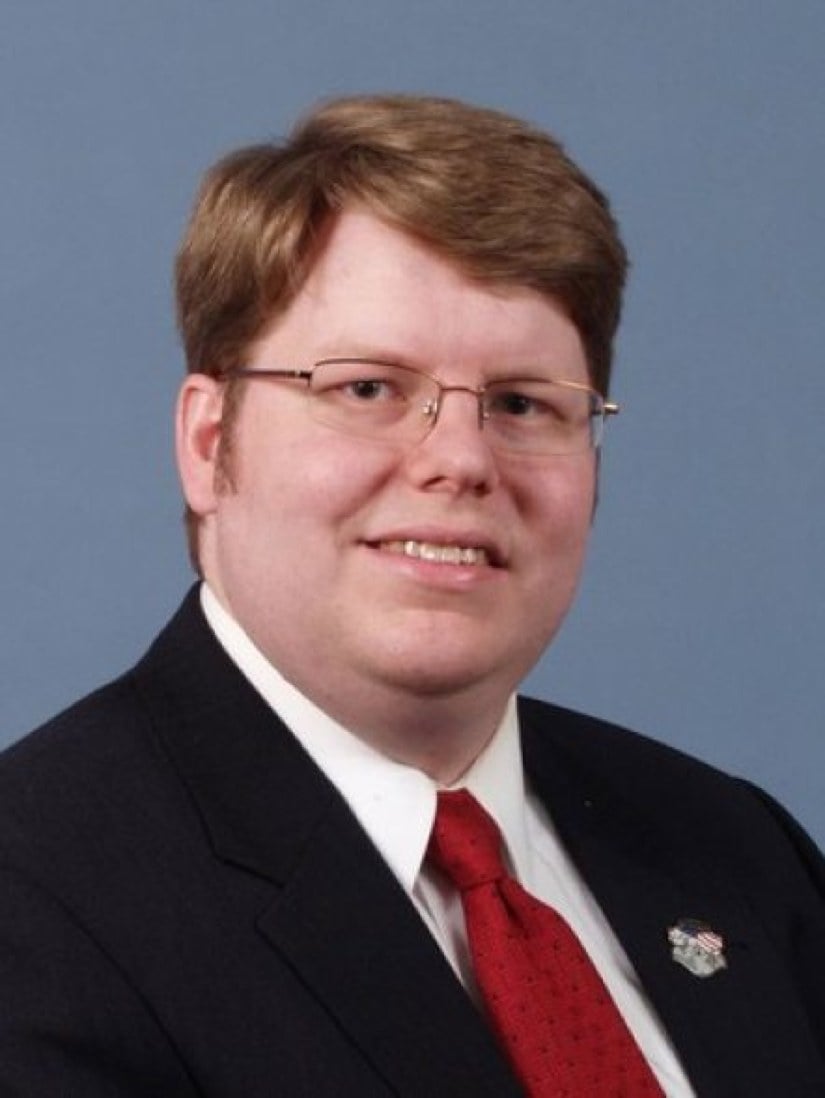 Last week, the Fairfax County Board of Supervisors approved the revised Comprehensive Plan for Reston, paving the way for the development around the future Silver Line stations to begin in earnest.
The new mixed-use, transit-oriented development along the Toll Road corridor will change the face of Reston in the coming decades. Those changes offer the potential for Reston to be a thriving, forward-looking, 21st-century community. They also pose significant challenges that the community will have to face.
As you likely know, RCA expressed a number of concerns about the plan revisions. We are concerned that the plan doesn’t do enough to address the traffic that the new development will add to our streets. We’re concerned that the plan doesn’t ensure that Reston’s new residents have enough parks and athletic fields nearby. And we’re concerned about the plan’s implementation, and who will be responsible for ensuring that the plan’s goals and constraints are met.
Unfortunately, the Board of Supervisors made only minor tweaks to the plan, and most of our concerns were not addressed. The Board did pass the follow-on motions recommended by the Planning Commission, the most important of which calls for “an inclusive process” to determine how the necessary transportation improvements will be funded.
But most of the issues we had with the plan passed by the Task Force are still there.
So is this the end of the road? Not even close. What happens next will go a long way toward determining whether our vision of Reston’s future succeeds. There’s still work to be done, and we need our citizens to remain active and involved. Here’s an outline of the road ahead for Reston, and how RCA will keep remain involved along the way.
Let’s start with the “inclusive process” on transportation funding. Obviously, RCA will push to ensure that we and other citizen groups are included in that process. And we will work hard to develop an equitable plan that delivers the transportation improvements we need.
Keeping Reston’s traffic moving will require a lot of improvements, including multiple additional crossings of the Toll Road. And someone — really, several someones — will need to pick up the tab. Much as we might hope that developer proffers will pay for it all, that’s not realistic. Most likely, a combination of state and county funding, proffers, and other sources will be tapped to get the money we need.
However, those “other sources” shouldn’t include another tax district on Restonians. At the Board of Supervisors’ discussion, the possibility of creating a Reston tax district to fund transportation improvements came up. Supervisor Hudgins has stated that she doesn’t support Restonians paying for the needed infrastructure on our own; RCA will work to make sure that we don’t.
In addition, there’s the larger question of plan implementation. Transportation funding is a key piece of the puzzle, but it’s not the only piece. We must determine our infrastructure needs and priorities, so that the money we do get is applied where it’s most needed. We also must consider how development can be phased so that our infrastructure can keep up.
In her remarks at the public hearing on the plan, Supervisor Hudgins stressed the importance of working with the community to develop an implementation process for the new development. We at RCA agree, and we look forward to helping develop that process.
At the Planning Commission, we heard that the Comprehensive Plan is only a guide, and the specifics will come when development proposals are considered. If that’s true, having a strong voice for our citizens in the development process is crucial. We need to be among the first to hear about proposed projects, not among the last. And our citizens must have a seat at the table, to ensure that the new development is consistent with Reston’s vision and values.
While we’re pushing for a proper implementation of the development in the corridor, we must also keep our eye on the rest of Reston. Remember, the plan amendments that were just approved only constitute Phase 1 of the plan review. Phase 2 covers all the other areas, most notably our village centers.
We don’t yet know when those areas will be studied or what form the study will take. RCA will be advocating for a citizen-driven process, more so than the developer-heavy Task Force we saw in Phase 1. The Phase 2 review should be charged with reimagining our village centers, to create something better than the strip malls that most of them are today, while protecting our existing residential neighborhoods and our open spaces. RCA will be working to ensure that we develop a process for Phase 2 that benefits the entire community.
As you can see, last week’s vote by the Supervisors isn’t the end of the process. Rather, it’s the beginning of a new chapter. It’s important that Reston’s citizens remain engaged in the process, and RCA intends to keep working hard to ensure that our community’s interests are represented.
Fortunately, we are not alone. One of the best things to emerge from the plan review, in my view, is the collaboration between RCA, RA, and the Alliance of Reston Clusters and Homeowners (ARCH) to advocate for common goals and keep Restonians informed about the changes that are coming. Our three organizations issued multiple joint statements recommending changes to the Comp Plan, and we held a widely attended and widely praised joint forum letting Restonians know about what was in the plan and how we thought it could be improved.
Our collaboration didn’t perfect the plan, and we didn’t get everything we wanted. But the plan is definitely better for our efforts. And the turnout at the forum shows how much the citizens appreciate our work. As we move to the next stage in planning Reston’s future, I hope that our three organizations, along with other Reston groups, continue working together for the good of Reston. We speak much more clearly when we speak as one voice, and Reston’s citizens are the winners.
Subscribe to:
Posts (Atom)